Copyright 2020 - 2021 irantour.tours all right reserved
Designed by Behsazanhost
12 Iran Natural Wonders: World’s Best Destination Dupes
Traveling the globe to witness its most iconic natural wonders can be expensive, time-consuming, and increasingly crowded. But what if you could experience the magic of the Grand Canyon, the glowing beaches of the Maldives, or the colorful mountains of China all in one epic journey? Welcome to Iran, the ultimate paradise for alternative travel and the home of the world’s most breathtaking “Destination Dupes” (international twin natural sights).
Iran offers a remarkably diverse landscape that perfectly mirrors some of the earth’s most famous geological landmarks. For tourists seeking budget-friendly pristine, and off-the-beaten-path alternatives, Iran’s hidden gems present an unparalleled eco-tourism opportunity. From the towering stone walls of the Zagros Mountains to the bioluminescent shores of the Sea of Oman. You can visit identical natural tourist attractions without the massive crowds eco-tourism opportunity. Before we dive into the details of these stunning global twins, it is helpful to know that Iran’s most spectacular natural “dupes” are primarily concentrated in 2 major geographical clusters. You can easily organize your journey around these two main regional itineraries.
− The Ultimate Southern Iran Nature Itinerary: Exploring the Persian Gulf and the Sea of Oman (Home to otherworldly Martian landscapes, glowing bioluminescent beaches, and dramatic ocean cliffs).
− The Best Natural Sites in Western & Northwestern Iran: From Zagros to Zanjan (Where you will find majestic river canyons, mystical rock formations, and ancient forests).
What are the top Destination Dupes in Iran?
Here is a quick list of the top international twin natural sights you can find in Iran:
- Grand Canyon (USA) ↔ Khazineh Valley (Lorestan)
- Vaadhoo Glowing Beach (Maldives) ↔ Chabahar Luminescent Coast
- Zhangye Danxia (China) ↔ Aladaghlar Mountains (Zanjan)
- Cappadocia (Turkey) ↔ Kandovan Rocky Village (Tabriz)
Now, let’s explore each of these incredible Iranian destinations in detail and find out why this untouched nature should be your next travel destination!

1- Iran’s Grand Canyon: Khazineh Valley vs Arizona (Lorestan Province)
Tired of Arizona’s 5-million-tourist crowds? Iran’s Khazineh Valley delivers the same jaw-dropping horseshoe bend, layered canyon walls, and emerald river—without a single tour bus in sight.
The Comparison
Arizona’s Grand Canyon: It is 445 km long and 1,857 meters deep, carved by the Colorado River. It’s a UNESCO site with over 5 million yearly visitors, requiring advance booking.
Iran’s Khazineh Valley is a 5 km gorge with 150–200 meter cliffs, located at the border of Lorestan, Ilam, and Kermanshah. It has no crowds and can be visited anytime without reservation.
What makes them geological twins?
Identical horseshoe river bends wrapping around rock islands
Millions of years of layered sedimentary rock exposed in colorful bands
Both carved by ancient rivers cutting through high plateaus
Why Khazineh Wins for Travelers
Silence over selfie sticks: Stand on cliff edges, hearing only wind and rushing water—no railings, no entry fees, no reservations.
Cultural Bonus: Lorestan is Iran’s nomadic heartland. Combine canyon hiking with authentic tribal encounters (think: hand-woven tents, fresh doogh, shepherds who’ve never seen a tourist).
Cost comparison: A trip to Arizona costs around 2,000, while visiting Khazineh Canyon costs roughly 200 in total.
Getting There
Location: Pol-e Dokhtar County, Lorestan Province (about 3 hours from Kermanshah)
Best seasons: Spring (March-May) for green valleys; Autumn (Sept-Nov) for mild weather
Difficulty: Moderate hiking on rocky trails—bring proper boots
Accommodation: Stay in Pol-e Dokhtar town (basic guesthouses, $15-25 per night)
Pro tip: Hire a local guide in Pol-e Dokhtar ($30/day) who knows hidden viewpoints that maps don’t show.

2- Iran’s Cappadocia: Kandovan Rocky Village vs Turkey’s Cappadocia
Cappadocia’s hot‑air balloons draw nearly three million visitors every year. But with more than 200 cave hotels and packed sunrise viewpoints, the experience can drain your budget fast. Iran’s village of Kandovan offers the same volcanic cone architecture—but instead of staying in a tourist hotel, you sleep in a 700‑year‑old cave home where a local family still bakes bread in its stone oven.
Cost per night: about $30. Crowds: almost zero
Turkey’s Original: Cappadocia
A UNESCO World Heritage Site: Vast valleys of volcanic cones, Byzantine cave churches, and iconic balloon flights ($250 per person). Most rock houses have been converted into boutique hotels and restaurants. The infrastructure is polished, but the destination is highly commercialized and global.
Iran’s Living Alternative: Kandovan Village (East Azerbaijan Province)
Not a museum—a living village. The village has over 700 years of continuous habitation in volcanic cones called “karan” (carved from Mount Sahand’s tuff). Families still live here: kids play in stone alleys, artisans sell mountain honey, grandmothers weave carpets in cave doorways. You don’t watch history—you enter it.
Geological Twins
Both are carved from eroded volcanic tuff. Both feature the same conical pillars. Both feature the same cave-dwelling architecture—homes carved into rock rather than built on it. Both are ancient settlements with centuries of habitation.
Why Kandovan Wins for Travelers
Authenticity over Instagram. No tour bus crowds. No $15 museum tickets. Stay in a family‑run cave guesthouse ($25–40 per night) where your host serves fresh doogh and walnut pastries. Walk freely through residential alleys—no ropes, no “Do Not Enter” signs. Experience a living culture, not a preserved one.
Total trip cost from Tabriz: under $100 vs. $2,000+ for Cappadocia.
Cultural depth: Kandovan’s Azerbaijani community preserves traditions lost in commercialized sites. Watch bread baked in traditional ovens, taste local honey harvested from mountain hives, hear Azeri language in daily life.
Practical Info
Location: 60 km south of Tabriz, Osku County
Access: Shared taxi from Tabriz (1.5 hours) or private car (1.5 hours). A private car costs about $25.
Accommodation: Cave guesthouses $25–40 per night (book via local contacts—limited online presence)
Best time: May–September (cool mountain weather, 15–25°C). Winters are harsh (snow, sub‑zero temperatures).
Difficulty: Moderate. Expect steep cobblestone alleys and uneven stone steps. Wear hiking boots.
Tip: Hire a local guide in village ($10) for access to private homes and hidden viewpoints
Bonus: Combine with Tabriz Bazaar (UNESCO site, 1 hour away)
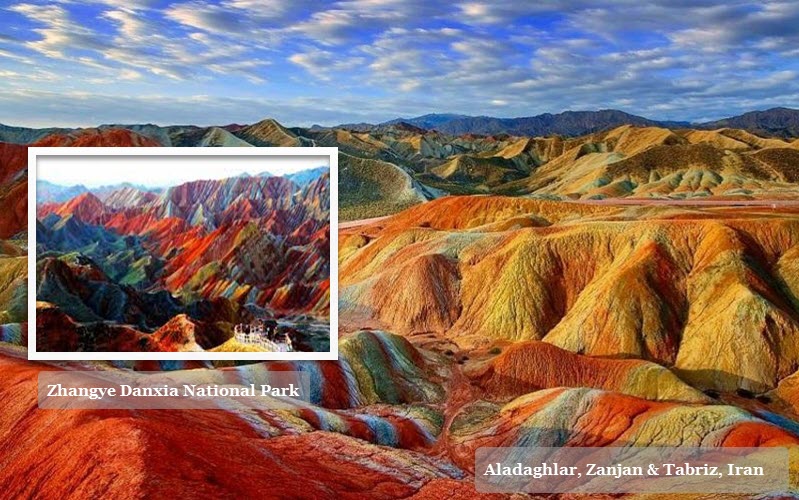
3- Iran’s Rainbow Mountains: Aladaglar vs China’s Zhangye Danxia
Zhangye Danxia in China charges an entrance fee of $27 and welcomes three million visitors who walk along wooden boardwalks. Touching the rocks is not allowed. Iran’s Aladaglar Mountains have about 70 km of similar colorful rock formations, but you can hike alone, camp freely, and take photos without barriers. There is no entrance fee—and no crowds.
The Geological Twins
Both sites formed around 24 million years ago as mineral‑rich sandstone layers (iron oxide = red, copper = green, manganese = yellow) that were stacked and tilted by tectonic uplift. After rain, the oxidized minerals become saturated, creating neon‑bright stripes that look almost Photoshopped. The science is identical—the access isn’t.
Zhangye became a UNESCO site in 2010, which brought infrastructure but killed spontaneity. You ride shuttle buses to four viewing platforms, stay behind railings, and leave by 6 PM. Aladaglar remains unregulated: drive the Zanjan–Mahneshan highway, pull over almost anywhere, and scramble up the hills. Local shepherds might offer you tea.
Why Aladaglar Wins for Adventurers
Freedom vs. fences. At Zhangye, guards whistle if you step off the boardwalks. At Aladaglar, you touch the crumbly clay hills, climb ridges for 360° views, and camp overnight (locals do it regularly). The colors shift from coral pink at dawn to burnt orange at sunset—and you control the timing.
Cost reality check:
Zhangye package (Xi’an flights + park entry + hotel): $600–800
Aladaglar road trip from Zanjan: village guesthouse (20)+homemadefood(ash‑edoogh,under20)+homemadefood (ash‑edoogh,under3) — under $50 total.Cultural bonus: Small villages like Angut dot the landscape. Families still mine the colorful clay for pottery. One shepherd told me the mountains “bleed” after rain—locals have watched these colors for generations, not Instagram likes.
Practical Info
Location: Zanjan–Mahneshan road (70 km stretch), Zanjan Province. Also visible from sections of the Zanjan–Tabriz highway.
Access: Any car works. Park roadside and hike 10–30 minutes uphill. No permits needed.
Best time: April–May (wildflowers) or September–October. Go 1–2 hours after rain for peak color saturation.
Difficulty: Easy roadside views, moderate if you climb ridges. Wear grip-sole shoes—the clay gets slippery when wet.
Insider tip: Hire a Zanjan-based guide ($25/day) who knows the most photogenic valleys and can arrange a night in a nomadic tent. The Milky Way over rainbow hills is unreal.
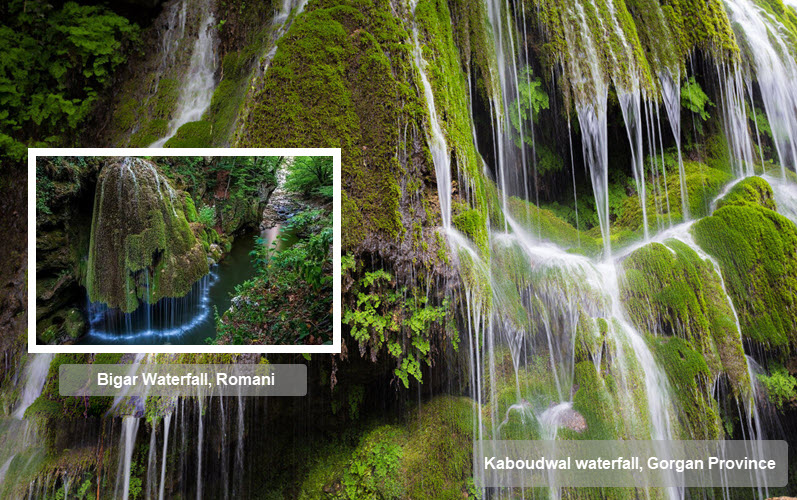
4- Iran’s Moss Waterfall: Kaboudwal vs Romania’s Bigar
Tired of Romania’s roadside photo-op crowds? Iran’s Kaboudwal delivers the same emerald moss curtain and veil of trickling water—but requires a 5 km forest hike that feels like discovery, not a drive-by.
The Comparison
Romania’s Bigar: an 8‑m‑wide tufa dome draped in moss. 10 meters from the parking lot. Listed by World Geography in 2013. 50+ tourists on weekends. Snap and leave.
Iran’s Kaboudwal: a 100‑m‑tall moss wall inside the UNESCO Hyrcanian Forest. A 5 km trail through 25‑million‑year‑old trees. About 5 visitors per day. Hike to earn it.
What makes them geological twins?
imestone bedrock + calcium‑rich spring water + shade = thick moss colonies.
Water seeps through the moss in delicate threads (not a crashing waterfall).
Both create a “living‑curtain” effect—green velvet and silver droplets.
Why Kaboudwal Wins for Nature Lovers
Immersion over Instagram: the 2.5‑km approach trail pulls you into Hyrcanian oak–hornbeam forests, past wild‑boar tracks and endemic ferns. The waterfall becomes the reward, not the only attraction.
Culture bonus: the trail passes Turkmen villages where families still make traditional felt. One grandmother offered me fresh lavash mid‑hike—she had been walking that path for 60 years.
Cost: Romania trip = 500+(flights,rentalcar,parkentry).Kaboudwal=500+(flights,rentalcar,parkentry).Kaboudwal=50 total (shared taxi from Tehran, guesthouse, optional guide).
Getting There
Location: Aliabad-e Katul, Golestan Province (2.5 hours from Gorgan)
Best seasons: Spring (April-May) for wildflowers + full flow | Autumn (Sept-Oct) for cooler temps
Difficulty: Moderate 5km round trip, 300m elevation gain. Wear hiking boots (rocks get slippery).
Accommodation: Stay in Aliabad-e Katul village (basic guesthouses, $20 - 30 per/night)
Pro tip: Start at 7 AM to hike in cool air and have the falls to yourself. Local guides ($10) know a scramble route to the top of the moss wall.
 5- Iran’s Phi Phi Islands: Tang-e Kafari vs. Thailand’s Maya Bay
Imagine Phi Phi’s towering limestone cliffs and emerald water—but swap four million annual tourists for complete silence. Tang‑e Kafari delivers the same jaw‑dropping vertical drama, minus the $50 entrance fees, boat queues, and Instagram crowds.
While Maya Bay was closed for 3.5 years due to ecological collapse, Iran’s hidden strait remains pristine, accessible, and costs under $10 to explore.
The Comparison
Both share the same geological drama: sheer cliffs rising 200+ meters from water at 90-degree angles, reflective green-blue waters, and a lush canopy. The difference? Tang-e Kafari is carved by the Seymareh Dam flooding a Zagros gorge—ancient oak forests instead of tropical karst, freshwater instead of saltwater, and Persian squirrels instead of tour groups. You glide through in a local wooden boat, spotting golden eagles overhead. Zero permits, zero queues.
Why Tang-e Kafari Wins for Travelers
Zero crowds. Zero closures.
Maya Bay’s 2018 shutdown was a wake‑up call. Tang‑e Kafari? You might be the only boat on the water.
Cost reality check:
Phi Phi day trip from Phuket: $80–120
Tang‑e Kafari boat hire: $5–10 for 1–2 hours
The Zagros double-hit:
Tang‑e Kafari sits about 3 hours from Darreh Khazineh (Iran’s Grand Canyon). One regional loop = two world‑class dupes.
Cultural bonus:
Your boat captain is likely a member of the Lur tribe who’ll share tea, point out eagle nests, and explain why locals call this “the place where mountains drink.”
Practical Info:
Location: Badreh County, Ilam Province (90 km from Ilam city)
Access: Paved road to Seymareh Dam, then a 10‑minute walk to the boat launch
Cost: Boat hire $5–10 (1–2 hours), no entrance fee
Best time: Late March–May (green oak forests, mild weather, full water levels). Avoid July–August heat
Difficulty: Easy. Short walk and calm water; suitable for all ages
Pro tip: Combine with Darreh Khazineh (3‑hour drive) for a 2‑day Zagros twin‑dupe tour. Hire a guide in Ilam city ($30/day) for both sites and cultural context
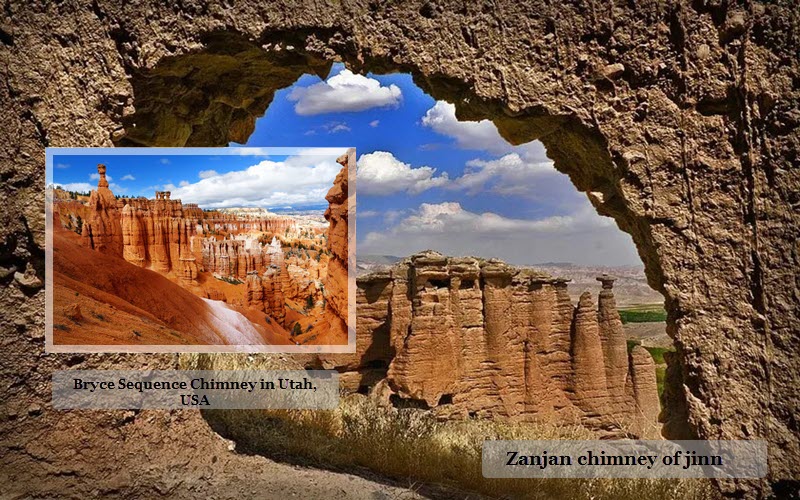
6- Iran’s Hoodoos: Jinn Chimney vs Utah (Zanjan Province)
Tired of Bryce Canyon’s crowded viewpoints and shuttle buses? Iran’s Jinn Chimney delivers the same surreal towering stone spires and otherworldly landscape—with complete silence, a touch of ancient mythology, and zero crowds.
The Comparison
Utah’s Bryce Canyon: The ultimate “hoodoo heaven,” with the highest concentration of these spires on Earth. Over 2.5 million visitors yearly. Requires national park fees, navigating busy trails, and dealing with mandatory shuttle buses during peak seasons.
Iran’s Jinn Chimney (Doodkesh‑e Jen): Striking clay columns topped with flat umbrella rocks, located near Mahneshan. Zero crowds. Wrapped in captivating local folklore and completely free to explore at any time.
.
What makes them geological twins?
Identical hoodoo formation process: a harder rock cap protects a softer rock column (such as clay or sandstone) from erosion.
Surreal, towering spires and pinnacles rise dramatically from the ground, creating a landscape that looks like another planet.
Both are masterful natural sculptures carved over millennia by wind, rain, and the slow passage of time.
Why Jinn Chimney Wins for Travelers
Silence over crowds: Explore these bizarre, fascinating formations in complete peace. No fighting for parking spots, no entrance queues—just you and the raw beauty of nature.
Culture & History bonus: Right next to these formations stands the spectacular Behestan Castle, an ancient fortress astonishingly carved directly into the hoodoos centuries ago. It’s a rare fusion of natural wonder and historical architecture you simply won’t find in Utah. Plus, you get to experience the local folklore that once attributed these strange pillars to supernatural “jinn” (genies).
Double the Value: The route to Mahneshan passes right through the Aladaghlar Mountains (Iran’s dazzling Rainbow Mountains). You can literally kill two birds with one stone and see two world‑class geological wonders in a single day trip from Zanjan.
Cost: A Utah road trip can cost thousands of dollars. The Jinn Chimney experience, however, is incredibly budget‑friendly—requiring only a tiny fraction of that for transport, food, and nearby accommodation.
Getting There
Location: Mahneshan County, Zanjan Province, northwest Iran.
Best seasons: Spring (April–June) for vibrant nature, and early autumn (September–October) for mild weather.
Difficulty: Easy to moderate. Reaching the base requires only a short, gentle walk, though exploring the nearby carved castle includes some stairs and uneven terrain.
Accommodation: Base yourself in Zanjan city, which offers comfortable hotels and traditional guesthouses.
Pro tip: Add a stop at the awe‑inspiring Dome of Soltaniyeh—a majestic Mongol‑era UNESCO World Heritage Site—to complete an unbeatable regional itinerary.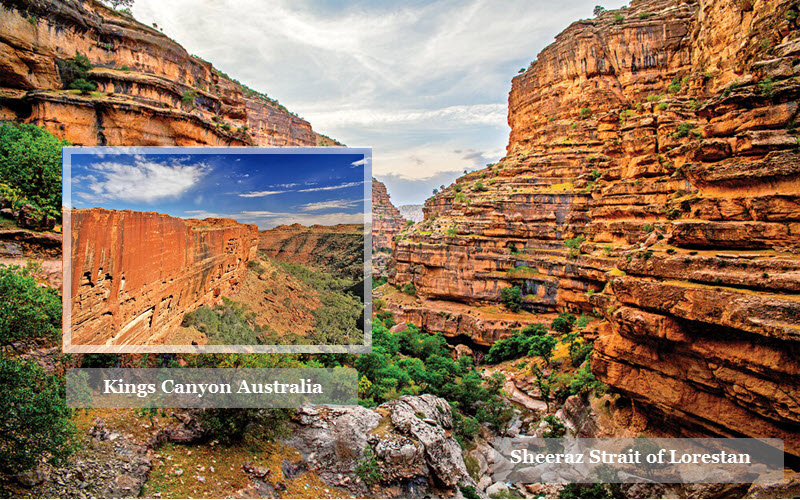
7- Iran’s Ancient Oasis: Shirez Canyon vs Australia (Lorestan Province)
Tired of the dry, heavily regulated trails of Australia’s Outback? Iran’s Shirez Canyon delivers the same towering vertical walls and hidden ecological sanctuaries as Kings Canyon—but as a vibrant, water‑filled paradise without strict pathways or heavy commercialization.
The Comparison
Australia’s Kings Canyon: Located in Watarrka National Park. Features sandstone walls plunging up to 300 m deep. Famous for its palm‑filled “Garden of Eden” refuge. Heavily regulated, often arid, and requires navigating the high costs of Outback travel.
Iran’s Shirez Canyon: A 5 km limestone gorge located at the Lorestan–Ilam–Kermanshah border. Flanked by 100–200 m terraced cliffs. A vibrant, living ecosystem with a permanent crystal‑clear river. Zero crowds. Show up anytime and dive right in.
What makes them geological twins?
Towering Vertical Walls: Both are defined by massive, steep rock faces (100–300 meters high) that dwarf the visitors walking below them.
Ecological Refuges: Both act as vital natural sanctuaries, protecting rich plant life, trees, and animals within their deep, shaded walls compared with the harsher surrounding landscapes.
Geological Time capsules: Both are the spectacular result of ancient water erosion carving through plateau rock over millennia.
Why Shirez Wins for Travelers
A Wilder, Interactive Adventure: While Kings Canyon is a strictly observational experience in a dry environment, Shirez is fully immersive. Your hike involves actively wading through cool, refreshing river water beneath the shade of ancient wild oak and plane trees. It is a completely untouched, pure nature walk.
Hidden Geological Marvels: Deep inside the canyon, you won’t just find trees; you will stand before the striking “God’s Minaret” (Minareh Sangi), a massive standalone rock pillar carved entirely by the elements.
Cost: A trip to the Australian Outback costs thousands of dollars. The Shirez Canyon experience is incredibly budget‑friendly, costing a tiny fraction of that for local transport, food, and nearby eco‑lodges.
The Ultimate Zagros Route: Because Shirez is located in Lorestan, you can easily link it with Tang‑e Kafari (Iran’s Phuket) and Khazineh Valley (Iran’s Grand Canyon). You get three completely different, world‑class geological wonders in one seamless western Iran road trip.
Getting There
Location: Kuhdasht County, Lorestan Province (bordering Ilam and Kermanshah).
Best seasons: Spring and early summer (May–July), when the water is refreshing and the canyon is vibrantly green.
Difficulty: Moderate. The 55 km trek involves walking on uneven riverbeds and frequently wading through shallow, flowing water—proper water shoes are an absolute must.
Accommodation: Stay in Kuhdasht or Khorramabad (traditional guesthouses or hotels ranging from 30 per night).
Pro tip: Hire a local guide from nearby villages who can show you the safest river crossings and the best spots to see wild fruit trees and hidden caves along the gorge walls.
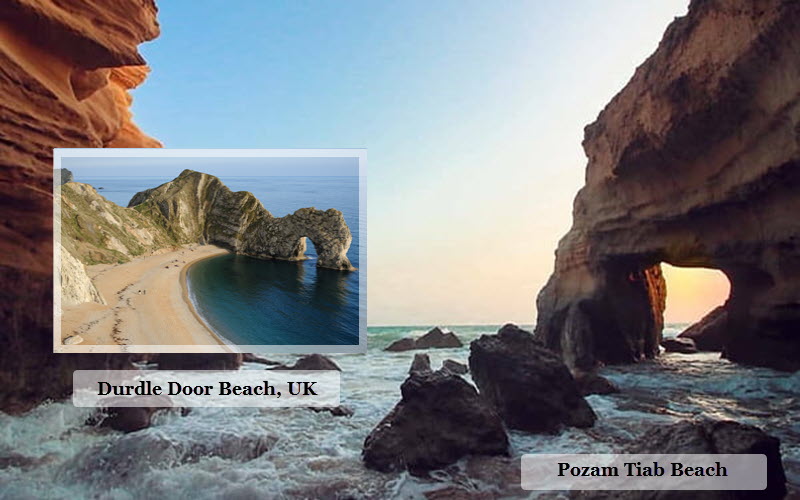
8- Iran’s Coastal Arch: Pozam Tiab Beach vs England (Sistan & Baluchestan)
Tired of the freezing winds and shivering crowds at England’s Jurassic Coast? Iran’s Pozam Tiab offers the same magnificent limestone sea arches and towering cliffs—but with warm tropical breezes, glowing bioluminescent waves, and none of the winter chill.
The Comparison
England’s Durdle Door: A famous limestone arch on the Jurassic Coast. Designated a UNESCO World Heritage Site. An extremely crowded beauty spot with pebbled shores. Its freezing waters make swimming a challenge for most of the year.
Iran’s Pozam Tiab Beach: A sprawling 74,845‑square‑meter coastal paradise near Chabahar (often called “Iran’s California”). Home to a majestic rock arch, dramatic cliffs, and soft sands. Completely off the tourist radar. Warm, sun‑drenched, and accessible year‑round.
What makes them geological twins?
The Iconic Sea Arch: Strikingly similar monumental stone arches rise dramatically from the sea, carved by thousands of years of relentless wave action.
Cliff-Side Panoramas: Both offer spectacular high‑vantage viewpoints from rugged cliffs that plunge steeply into the ocean.
Geological Carving: Both are classic examples of coastal erosion, where softer rock layers were gradually worn away, leaving the majestic hard‑rock gateways intact.
Why Pozam Tiab Wins for Travelers
Winter Sun over Freezing Winds: Visit Durdle Door in winter and you’ll be met with icy Atlantic gales. In stark contrast, southern Iran becomes a true winter sanctuary, offering a pleasant, sun‑drenched, spring‑like climate while much of the northern hemisphere remains locked in the cold.
Nighttime Magic: After sunset, the shores of Pozam Tiab shimmer with bioluminescent phytoplankton, transforming dark waves into a sparkling, star‑studded blue spectacle—an enchanting natural phenomenon you simply won’t find along the UK coast.
Ocean Geysers: Walk along the rocky edges to witness powerful natural blowholes that shoot seawater high into the air through narrow coastal fissures.
Cost: A UK coastal getaway can easily cost hundreds—or even thousands—of pounds. By contrast, a journey to Iran’s southern shores comes at a fraction of that price, covering domestic flights, exceptional local seafood, and comfortable stays.
Getting There
Location: Konarak County, Sistan and Baluchestan Province, southern Iran, near Chabahar.
Best season: Winter (December–early March), when the region offers a pleasantly warm, breezy climate while much of the northern hemisphere remains cold.
Difficulty: Easy. The beach is highly accessible, though walking along the rocky edges near the arch and blowholes requires normal caution and sturdy footwear.
Accommodation: Base yourself in Chabahar, which offers comfortable coastal hotels and eco‑lodges (approximately $20–40 per night).
Pro tip: Turn this trip into the “Ultimate Southern Expedition.” After exploring the arches and glowing shores of Pozam Tiab, continue to the Persian Gulf islands—Qeshm and Hormuz—to sail through mangrove forests, spot wild dolphins, and walk across surreal, multicolored sands.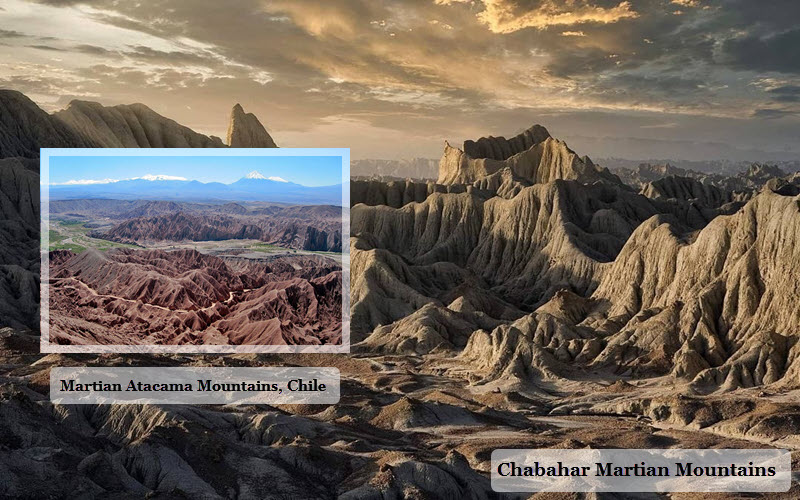
9- Iran’s Mars on Earth: Chabahar Martian Mountains vs Chile
Tired of expensive long‑haul flights and grueling high‑altitude treks in Chile’s Atacama Desert? Iran’s Chabahar Martian Mountains offer similarly surreal, corrugated lunar landscapes, extraterrestrial rock formations, and extraordinary stargazing—set right beside the warm, welcoming waters of the Sea of Oman.
The Comparison
Chile’s Atacama Desert: Set on a high Andean plateau, the Atacama is renowned for its 22‑million‑year‑old deep‑red rock formations, lunar valleys, and some of the darkest night skies on Earth. It’s a highly sought‑after destination—one that demands costly long‑haul travel, fully booked desert lodges, and mandatory altitude acclimatization.
Iran’s Chabahar Martian Mountains: Stretching along a scenic coastal road, these heavily eroded “Miniature Mountains” rise between 5 and 100 meters. No altitude sickness, no crowds—simply arrive, take a few steps, and find yourself standing in a landscape that feels truly otherworldly.
What makes them geological twins?
Extraterrestrial Landscapes: Both regions feature deeply eroded, barren terrain with little to no vegetation, creating landforms that strikingly resemble the rugged surface of Mars.
Erosional Sculpting: Wind and water erosion have carved sharp, corrugated ridges, unusual mineral patterns, and surreal rock formations over thousands of years.
Exceptional Night Skies: Far from major sources of light pollution, both destinations offer remarkably clear skies and outstanding opportunities for stargazing.
Why Chabahar Wins for Travelers
Sea Meets Space: Unlike the bone-dry, landlocked Atacama, the Chabahar Martian Mountains run directly parallel to the stunning beaches of the Sea of Oman. You can literally hike on “Mars” in the morning and swim in tropical ocean waters by the afternoon.
The Ultimate Winter Itinerary: Combine this otherworldly site with the glowing shores of Pozam Tiab Beach, the mangrove forests of Qeshm, and the multi-colored sands of Hormuz Island for a world-class, multi-destination southern winter expedition.
Cost: Chile trip = $3,000+ for international flights, high-end desert lodges, and guided tours. Chabahar = Under 300 total (including domestic flights from Tehran, local seafood feasts, and coastal eco-lodges).
Getting There
Location: Along the scenic coastal road from Chabahar to Gwadar, Sistan and Baluchestan Province, Southern Iran.
Best seasons: Winter (December to early March) is absolutely perfect for exploring without the intense summer heat.
Difficulty: Easy to Moderate. Exploring the base is a simple walk; climbing the delicate ridges requires caution to preserve the structures.
Accommodation: Stay in Chabahar town or local coastal eco-lodges (basic to comfortable, 20- 40 per/night).
Pro tip: Rent a car or hire a local driver for the Chabahar-Gwadar coastal road at golden hour. The visual contrast between the pink-hued Martian mountains on your left and the deep blue ocean on your right is a photographer’s absolute dream.
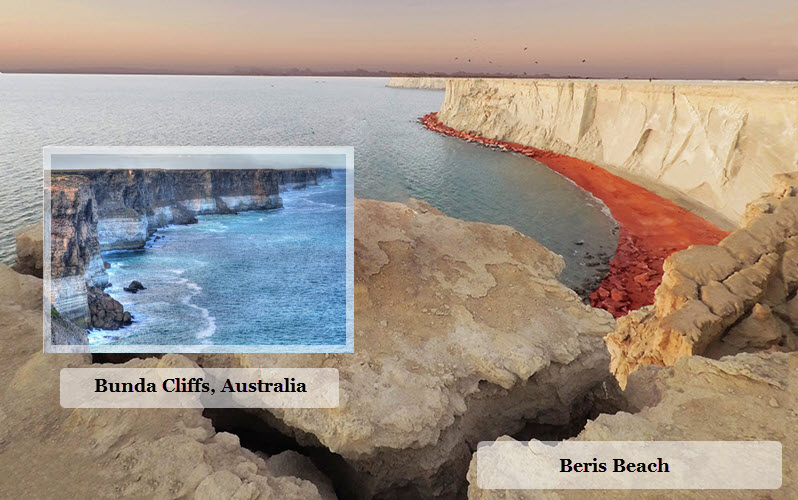
10- Iran’s Edge of the World: Beris Cliffs vs Australia
Tired of the logistical hurdles and extreme isolation required to reach Australia’s Bunda Cliffs just to watch the Southern Ocean thunder against limestone walls? Iran’s Beris Cliffs—located in the Sistan‑and‑Baluchestan Province—offer a remarkably similar spectacle of sheer vertical drops plunging into the azure sea. However, Beris adds a unique cultural layer: the sight of a picturesque fleet of traditional wooden dhows (Lenjes) anchored below, combined with a far more accessible and inviting winter climate.
The Comparison
Australia’s Bunda Cliffs: Rising along the Great Australian Bight, these immense limestone walls form part of a vast 200,000‑sq‑km bedrock exposure. The area is extremely remote, requiring long drives across the desolate Nullarbor Plain to reach a coastline defined by stark, isolated wilderness.
Iran’s Beris Cliffs: Along the shores of the Sea of Oman, rugged cliffs drop abruptly into deep‑blue water. Easily reached via a short coastal drive, the viewpoint above Beris offers a breathtaking, vertigo‑inducing panorama over a lively working fishing harbor.
What makes them geological twins?
Dramatic Vertical Drops: Both destinations are defined by towering, sheer cliff faces that plunge straight into deep ocean waters.
Endless Ocean Panoramas: From the edge of either escarpment, the view stretches uninterrupted to the horizon, where sea and sky dissolve into a single, luminous line.
Raw Coastal Power: Each landscape reflects the combined forces of tectonic uplift and relentless marine erosion, sculpting these formidable coastlines over thousands of years.
Why Beris Wins for Travelers
A Living Landscape: From the heights above Beris, you don’t just gaze out over empty ocean—you look down on a postcard-perfect scene of traditional wooden fishing boats bobbing in vibrant blue waters. It’s where the raw drama of nature meets the enduring rhythms of local life, creating a setting as photogenic as it is authentic.
The Ultimate Winter Circuit: Thanks to its location in Iran’s warm southern belt, Beris forms the finishing touch to an unforgettable winter road trip. Here, you can seamlessly combine the cliffs with the Chabahar Martian Mountains, Pozm Tiab Beach, and the stunning Persian Gulf islands of Qeshm and Hormuz—crafting a world-class circuit of geologic wonders, pristine beaches, and unique island culture.
Cost: Australia trip = at least 3,000+ for international flights and outback car rentals. Beris = Under $300 total (including domestic flights to Chabahar, coastal transport, and fresh seafood feasts).
Getting There
Location: Beris Port, about 60 km east of Chabahar, Sistan and Baluchestan Province, Southern Iran.
Best seasons: Winter (December–early March). The mild, breezy weather provides a perfect escape from freezing global temperatures.
Difficulty: Easy access, but requires extreme caution. There are no guardrails on the raw cliff edges, so visitors must maintain a safe distance while taking photos.
Accommodation: Stay in Chabahar city hotels or nearby coastal eco-lodges (comfortable and authentic, $20–50 per night).
Pro tip: Time your visit for sunset. Sitting near the edge, breathing the fresh ocean air while the golden light hits the cliffs and the local fishing fleets return, is an experience that rivals any coastal view on Earth.
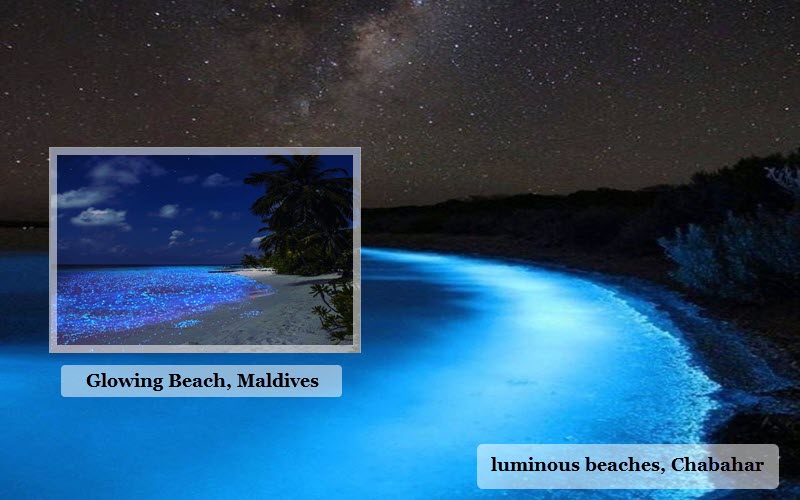
11- Iran’s Sea of Stars: Chabahar Luminous Shores vs Maldives
Tired of spending thousands of dollars on luxury resorts in the Maldives just to see the glowing “Sea of Stars”? Iran’s Chabahar coastline (Sistan & Baluchestan Province) delivers the exact same enchanting, bioluminescent blue waves—without the exorbitant price tag, and as part of an incredible, multi-faceted winter adventure.
The Comparison
The Maldives Glowing Beach: A world-famous phenomenon, most commonly associated with Vaadhoo Island. It has become highly commercialized, typically requiring expensive international flights and luxury resort bookings just to access the shoreline.
Iran’s Chabahar Luminous Shores: Pristine, untouched beaches near Tang Village. These shores are completely free to visit, entirely devoid of crowds, and naturally scattered with bioluminescent plankton that shimmer like blue diamonds in the sand.
What makes them natural twins?
The “Sea of Stars” Effect: Both beaches are illuminated by bioluminescent phytoplankton and coastal snails, which emit brilliant blue light when disturbed by waves or passing footsteps.
Nocturnal Magic: The real allure of these shores reveals itself only after dark—a rare, surreal, and deeply romantic coastal encounter.
Ecosystem Sensitivity: Both destinations depend on fragile marine ecosystems, requiring visitors to travel responsibly and prioritize sustainable tourism.
Why Chabahar Wins for Travelers
The Ultimate Winter Circuit: Chabahar transforms a single natural phenomenon into a full-scale adventure. Imagine the perfect day: exploring the otherworldly Chabahar Martian Mountains in the morning, visiting the stone arches of Pozam Tiab in the afternoon, watching the sunset from the towering Beris Cliffs, and finally ending the night walking across glowing blue diamonds at Tang Beach. Extend the journey to the islands of Qeshm and Hormuz, and you have a truly 100 percent complete winter circuit—something the Maldives simply cannot offer.
Cost: A Maldives trip typically costs over $5,000 for luxury water villas. Chabahar = Under $300 total (including domestic flights, local transport, and eco-lodges).
Getting There
Location: Chabahar coastline (specifically near Tang Village beach), Sistan and Baluchestan Province, Southern Iran.
Best season: Winter nights (during the 4–5 colder months of the year). Dark, moonless nights provide the highest visibility for the blue glow.
Difficulty: Easy beach walk. Crucial Eco-Tip: These phytoplankton are living organisms, not souvenirs. Never put them in a container to take away; leave the ecosystem exactly as you found it.
Accommodation: Chabahar city hotels or nearby coastal eco-lodges ($20–50 per night).
Pro tip: For the most mesmerizing photos and experience, visit on a pitch-black, moonless night. Gently shuffle your feet in the wet sand or softly splash the shallow water to actively trigger the magical blue luminescence.
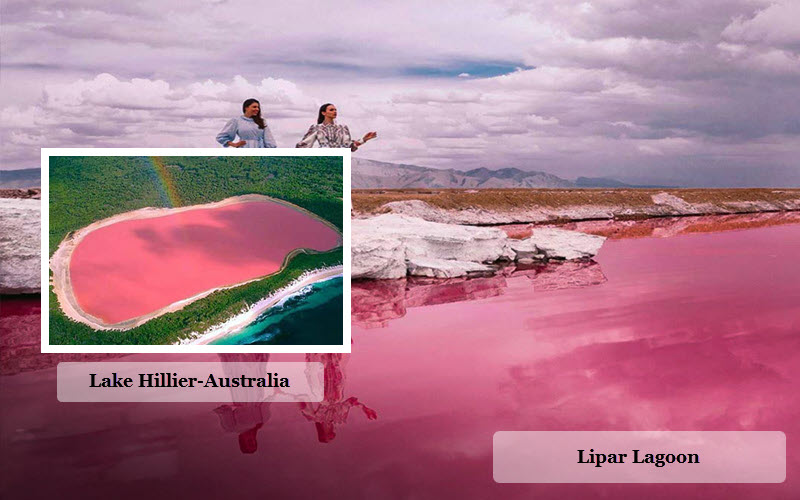
12- Iran’s Pink Wonder: Lipar Lagoon vs Lake Hillier
Want to see one of the world’s rare bubblegum-pink lakes, without spending thousands of dollars on a remote Australian helicopter tour? Iran’s Lipar Lagoon (Sistan & Baluchestan Province) offers the exact same surreal pink waters, but it’s easily accessible by road, bursting with biodiversity, and is a brilliant addition to an epic southern Iranian road trip.
The Comparison
Australia’s Lake Hillier: A highly remote saline lake on Middle Island in Western Australia. Viewing it typically requires expensive scenic flights or specialized boat cruises. The site is extremely isolated, offers limited visible biodiversity to visitors, and lacks any easy ground access.
Iran’s Lipar Lagoon: A 10‑hectare seasonal wetland located just 20 km east of Chabahar port. Set directly along a stunning coastal road, it contains nearly 90 percent of the region’s herbal plankton. There are no entry fees, and the lagoon is open to direct, ground‑level access.
What makes them natural twins?
Surreal Pink Waters: Both bodies of water exhibit a stunning, photogenic pink hue caused by natural biological phenomena, specifically microalgae and high salinity.
Coastal Proximity: Both sit incredibly close to a major ocean, offering a spectacular visual contrast between the vibrant pink lake and the deep blue sea.
Extreme Rarity: They both belong to an elite, rare group of only about 66 highly visible pink lakes across the globe.
Why Lipar Wins for Travelers
Accessibility over Isolation: Unlike the remote, permit‑restricted shores of Lake Hillier, which require pricey scenic flights to view, Lipar Lagoon invites you to drive right up to its edge. Here, you are free to explore the vibrant pink shoreline at your own pace—no private charter or special access required.
Living Biodiversity: While Lake Hillier remains largely isolated and sterile due to its extreme salinity, Lipar Lagoon is a thriving, dynamic ecosystem. It serves as a vital sanctuary for diverse migratory birds and flamingos, offering visitors a vivid encounter with nature that goes beyond a mere photo opportunity.
Cost: Australia trip from $3,000+ just to get to the region, plus expensive chartered flights. Lipar,bycontrast,costsunder300 total (including domestic flights to Chabahar, local transport, and eco‑lodges).
Bonus Regional Itinerary
Adding Lipar Lagoon perfectly rounds out a comprehensive Iranian winter tour. Start in the cultural heartland of Shiraz to marvel at the ancient ruins of Persepolis. Take a quick flight south to Chabahar to blend history with surreal nature. In a single incredible day, you can drive the scenic coastal road to Lipar Lagoon, hike the extraterrestrial Martian Mountains, watch the sunset from the towering Beris Cliffs, and end your night stepping on the glowing blue waves of Chabahar’s Luminous Beaches.
Getting There
Location: 20 km east of Chabahar, near Lipar village, Sistan and Baluchestan Province, Southern Iran.
Best seasons: Winter and early spring (January–April). The pink color is most vivid during this period, depending on rainfall and plankton activity.
Difficulty: Very easy. The lagoon is just off the main coastal road, requiring minimal walking.
Accommodation: Chabahar city hotels or local coastal eco‑lodges ($20–50 per night).
Pro tip: Visit during the golden hour (sunrise or sunset) to see the pink hues contrast most dramatically against the surrounding golden landscapes and the deep blue Sea of Oman.
Conclusion
Iran’s 12 breathtaking destination dupes offer travelers a unique opportunity to explore pristine, uncrowded wonders. From the Zagros canyons to Chabahar’s glowing shores, these diverse landscapes rival famous global sites. Experience epic adventures for under $300, proving you don’t need massive budgets to witness Earth’s most magical geology.
Common Questions
1- Are these remote natural sites in Iran safe for international tourists to visit? Yes, these regions are welcoming, but due to their raw, unregulated nature, hiring a local guide (often just $25–30 per day) is highly recommended for safe navigation and cultural context.
2- Is it really that cheap to visit these Iranian natural wonders compared to places like Cappadocia or the Grand Canyon? Absolutely. With no entrance fees for most sites and affordable local guesthouses costing $15−40 per night, a complete regional trip rarely exceeds 300.
3- How can I fit both the northern and western sites (like Kandovan) and southern sites (like Chabahar) into one trip? Since the distances are vast and the ideal seasons differ (spring for the West and Northwest, winter for the South), it is best to split them into two separate trips rather than rushing them in one go.
References
www.lonelyplanet.com/iran
www.tehrantimes.com
www.ifpnews.com
- Details
- Category: What to see in IRAN