Copyright 2020 - 2021 irantour.tours all right reserved
Designed by Behsazanhost
9 Best Iran Beaches: The Complete Seasonal Guide
The 9 best Iran beaches stretch across more than 2,050 kilometers of coastline, including 1,400 kilometers along the Persian Gulf and Gulf of Oman and 650 kilometers on the Caspian Sea coast. With warm southern shores for winter escapes and cool northern beaches for summer holidays, Iran is one of the best travel destinations for year-round coastal tourism.
The southern coast of Iran enjoys a warm climate, making it a top winter getaway for travelers, especially visitors from Europe seeking sunshine and mild temperatures. In contrast, the northern Caspian coast features lush forests, scenic beaches, and temperatures often 20°C cooler than cities along the Persian Gulf, creating the perfect setting for summer vacations, cool destinations, and seaside relaxation.
Over the years, our team at IranTour has accompanied travelers from Europe, the Gulf states, and beyond to almost every beach destination on this list — and the reactions are always the same: genuine surprise at how different the reality is from the expectation. This guide is built on that experience. It covers not just where to go, but when to go, how to get there, where to stay, and exactly what to do when you arrive.
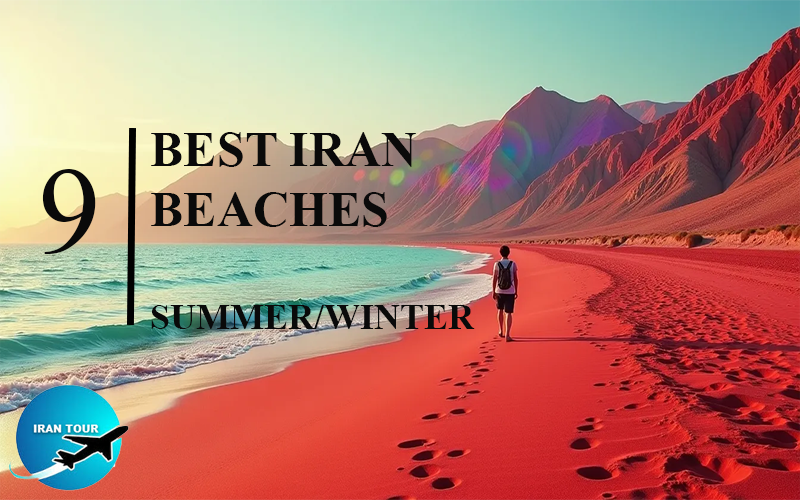
Iran's Two Beach Worlds: How to Choose Your Season
The key to understanding Iranian beaches is simple: Iran has two entirely different coastlines, and they peak at opposite times of year. Plan your trip around this one fact, and everything else falls into place.
| Season | Best Region | Ideal For | Average Temp |
|---|---|---|---|
| May – September | Caspian Sea (north) | Gulf Arab families, European summer travelers | 24–30°C |
| October – April | Persian Gulf & Gulf of Oman (south) | European winter sun seekers, international visitors | 22–28°C |
| Year-round | Kish & Qeshm islands (visa-free) | All travelers, short breaks | 20–35°C |
For travelers comparing destinations, it is also worth knowing how Iran's beaches stack up against the alternatives in the region:
| Factor | Iran (Kish) | UAE (Dubai) | Turkey (Antalya) | Thailand (Phuket) |
|---|---|---|---|---|
| Cost per day (mid-range) | $60–100 | $200–400 | $80–150 | $70–130 |
| Visa ease | 14-day free | Easy | Easy | Easy |
| Crowds | Low to moderate | Very high | High | Very high |
| Cultural depth | Exceptional | Moderate | High | Moderate |
| Unique factor | Colored islands + history | Luxury towers | Ruins + sea | Tropical |
Find Your Perfect Iranian Beach in 10 Seconds
- Want cool and green in summer? → Gisoom Beach or Ramsar
- Want turquoise water and warmth in winter? → Kish Island or Qeshm
- Want an otherworldly landscape? → Hormuz Island
- Want a wildlife experience? → Hengam Island
- Want adventure and remote coastline? → Ramin Beach or Darak Beach
- Best for families with children? → Kish Island or Fereydunkenar
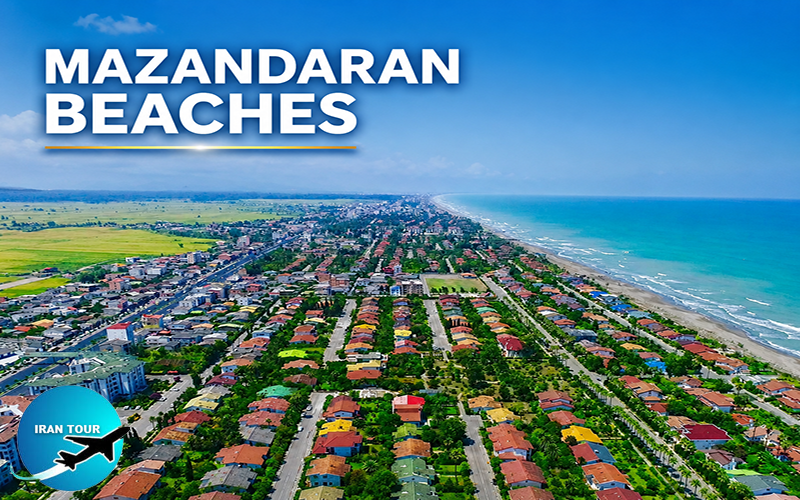
Caspian Sea Beaches: Iran's Summer Riviera
Every summer, our team at IranTour receives calls from travelers in Dubai, Kuwait, Muscat and Riyadh asking the same question: "Where can we go that's green, cool, and close?" The answer is almost always the same — northern Iran. While temperatures in the Gulf hover above 45°C in July and August, the Caspian coast sits at a comfortable 24–28°C, wrapped in the greenery of the Hyrcanian Forests, a UNESCO World Heritage Site that stretches along the length of the northern coast. For families from the Gulf region, this combination of cool air, forested mountains, and open water is genuinely unlike anything within two or three hours of home.
The Caspian Sea itself is a remarkable body of water. As the world's largest inland lake, it has lower salinity than any ocean — roughly one-third the salt content of typical seawater — which gives it a distinctly gentle quality for swimmers. The shoreline alternates between long sandy stretches, fishing harbors, and forested parks where the trees grow almost to the waterline. Across three provinces — Gilan, Mazandaran, and Golestan — the northern coast offers something different at every turn.
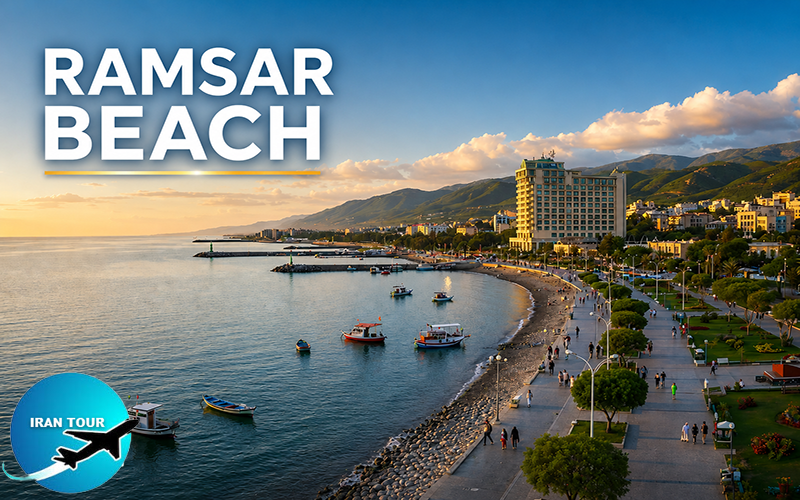
Ramsar— The Royal Retreat of the Caspian
| Province | Mazandaran |
| Distance from Sari (provincial capital) | 178 km |
| Distance from Ramsar Airport | 3 km |
| Hotels | Ramsar Grand Hotel ⭐⭐⭐⭐⭐ · Morvarid Hotel ⭐⭐⭐⭐ · Bozorg Hotel ⭐⭐⭐ |
| Activities | Swimming, cable car rides, natural hot springs, Marble Palace tour, hiking, Tall waterfalls, Hot springs, Traditional Bazaars, Forest villas |
| Nearby | Javaherdeh Highland (45 min), Hyrcanian Forests, Lahijan City, Tea Farms |
| Best time to visit | May – September |
Why Ramsar city
Ramsar City, one of the most beautiful cities in northern Iran, is the best summer travel destination for Arab tourists. This beautiful city is located near the sea and mountains, and with its cool mountain climate, dense forests, and beautiful nature, it makes for an unforgettable stay. The hospitable people, beautiful tourist attractions, and diverse accommodation facilities from 5-star to 3-star hotels, along with affordable family villas and forest cottages, have made Ramsar an ideal choice for a dream stay in the summer.
Why Ramsar Is the Jewel of Iran’s Caspian Coast
The beach at Ramsar offers one of the most visually satisfying combinations on the Caspian coast: clean sand, calm water, and the Alborz Mountains rising immediately behind the town. A cable car ride above the city provides sweeping panoramic views of both the mountain range and the sea below. The natural hot springs in the surrounding hills have been a draw for visitors for over a century, and several spa facilities in the area allow guests to combine beach days with thermal bathing. The Marble Palace — a 1930s royal summer residence built for the Pahlavi dynasty — sits a short distance from the shore and is open to visitors; it speaks clearly to Ramsar's long history as a preferred retreat for those who could afford to choose anywhere.
Our Passengers Experience
Gulf families who visit Ramsar through IranTour consistently mention the temperature as the first thing they notice stepping off the plane. After the relentless heat of a Gulf summer, the cool mountain air at Ramsar feels like a physical relief. Most book a week or more.
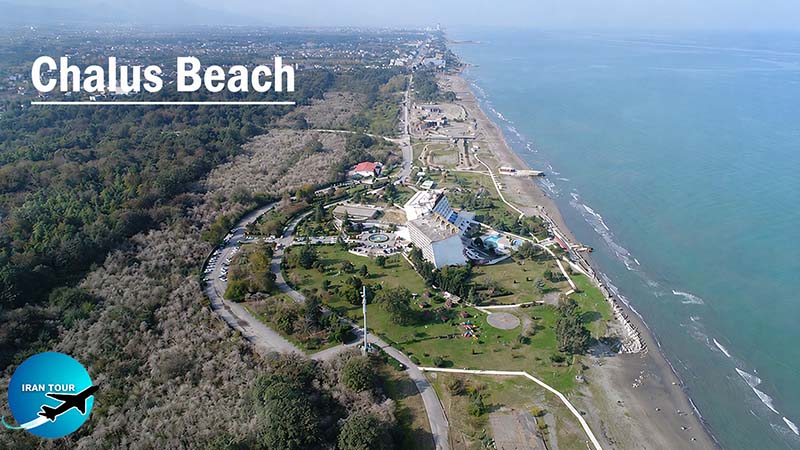
Chalus — Where the Forest Road Meets the Sea
| Province | Mazandaran |
| Distance from Tehran | 205 km via Chalus Road (Route 59) |
| Nearest airport | Noshahr Airport — 15 km |
| Hotels | Parsian Azadi Hotel ⭐⭐⭐⭐Parmis Hotel Noshahr ⭐⭐⭐⭐ · Korosh Hotel ⭐⭐⭐ Morvarid Chalus ⭐⭐⭐ |
| Activities | Swimming, beach volleyball, cycling, forest park trails |
| Nearby | Kelarabad forest, Valasht Lake (45 min), Namak Abroud Cable car (15 min), Nowshahr Port (15 min) |
| Best time to visit | June – August |
Why Chalus
Chalus is where the mountains meet the sea in the most dramatic way possible on Iran's northern coast. The journey itself — through the celebrated Chalus Road — is one of the great mountain drives of the Middle East, and the destination rewards the effort: clean beaches, dense forest parks, and a cool Caspian breeze that makes it one of the most refreshing summer escapes in the region. For families, couples, and nature lovers alike, Chalus offers a complete northern Iran experience within a few hours of Tehran.
The Drive That Is Worth the Journey Itself
Getting to Chalus is part of the experience. The Chalus Road — Route 59 — is one of the most celebrated mountain drives in the country, climbing through the Alborz range via river valleys, tunnels, and hairpin bends before descending to the coast. Travelers who make the drive from Tehran often say the road is worth the trip on its own. The journey takes around three to four hours by car and passes through landscapes that shift dramatically from the dry plateau of central Iran to dense broadleaf forest as you approach the sea.
The Beach, the Forest, and a Practical Note for International Visitors
Chalus and the neighboring town of Noshahr share some of the best-developed beach facilities on the Caspian coast. The sand here is clean and the water generally calmer than in more exposed sections. Forest parks along the coast offer shaded picnic areas and walking trails. One practical note worth passing on from our IranTour team: Friday is the Iranian weekend, and the roads to Chalus from Tehran can be heavily congested. Flying into Noshahr Airport — which receives regular domestic flights from Tehran — is the smarter option for international visitors and families traveling with luggage. It saves hours and starts the holiday the moment you land.
Our Passengers Experience
Travelers who make the road journey to Chalus consistently describe the Chalus Road as one of the unexpected highlights of their entire Iran trip. Passing through the high Alborz passes, watching the landscape shift from the dry Tehran plateau to sudden green forest, and arriving at the coast with the sea appearing through the trees below — it is the kind of arrival that stays with people. Many of our passengers from the Gulf states tell us they booked Chalus expecting the beach and left talking about the drive.
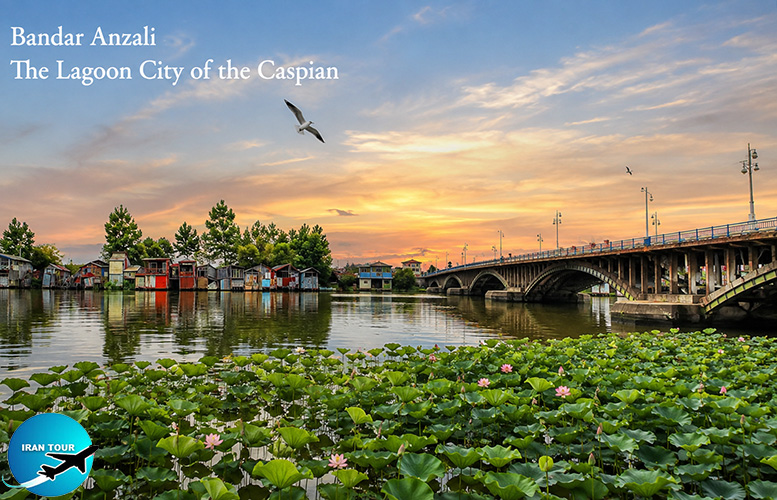
Bandar Anzali — The Lagoon City of the Caspian
| Province | Gilan |
| Distance from Rasht | 40 km |
| Rasht Airport to Anzali | 35 km |
| Hotels | Pardisan Hotel ⭐⭐⭐ · Laleh Anzali Hotel ⭐⭐⭐, Anzali Grand Hotel ⭐⭐⭐, Mother Hotel ⭐⭐⭐ |
| Activities | Lagoon boat tours, lotus fields, birdwatching, fish market, seafood dining |
| Nearby | Masuleh village (55 min), Rasht UNESCO Creative City of Gastronomy, Gisom Beach |
| Best time to visit | May–September (peak lotus season: July–August) |
Why Bandar Anzali
Bandar Anzali is the Caspian coast at its most layered and rewarding. This is not simply a beach town — it is a historic port city with a living lagoon, a famous fish market, and a natural ecosystem of international significance right at its edge. For travelers who want more than sand and sea, Anzali offers a depth of experience that few coastal destinations anywhere in Iran can match. The lotus fields alone — blooming each July and August across the surface of the Anzali Lagoon — are worth the journey from anywhere in the country.
More Than a Beach Town
Bandar Anzali is not primarily a beach town — it is something more interesting than that. As a major Caspian port with a long trading history, the city has an atmosphere layered with culture and commerce that most beach destinations lack. The Anzali Lagoon, which stretches inland from the coast, was among the first wetlands in the world to receive international protection under the Ramsar Convention when it was signed here in 1971. That history has preserved the lagoon in remarkable condition: it remains one of Iran's most important natural habitats, home to hundreds of species of migratory birds, fish, and the lotus flowers that bloom across the water's surface each July and August.
The Lotus Fields, the Fish Market, and the Food That Surrounds It All
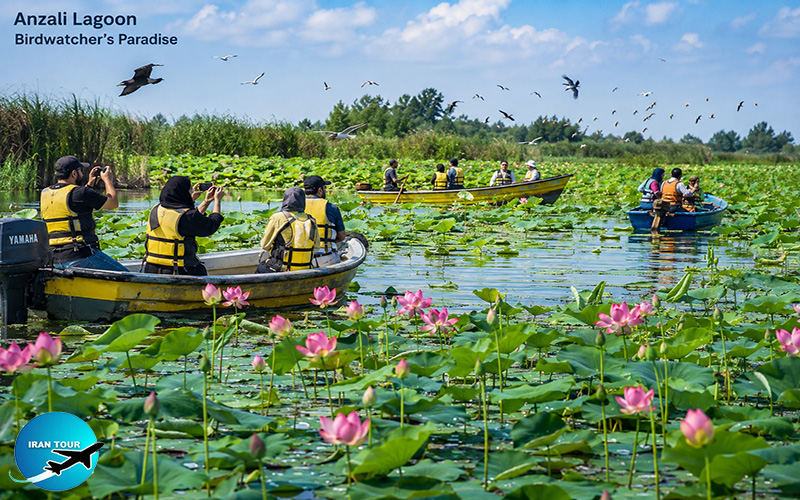
A boat tour through the lotus fields in peak season is one of the genuinely unmissable experiences on the Caspian coast. The flowers rise above the water in dense pink-and-white masses, and the light in the early morning turns the lagoon into something almost hallucinatory. The fish market near the port sells smoked Caspian whitefish, caviar, and fresh catch directly from the boats. And the nearby city of Rasht — designated a UNESCO Creative City of Gastronomy — adds a compelling food dimension to any visit here. Gilan province produces some of Iran's most distinctive regional cooking, built on the rice, fresh herbs, pomegranate, and walnut that grow abundantly in this part of the country.
Our Passengers Experience
Visitors from the Gulf states — many of whom arrive having spent years in some of the most developed cities in the world — consistently describe the boat tour through the Anzali Lagoon as one of the most unexpected and moving experiences of their time in Iran. Gliding through the lotus fields at dawn, surrounded by silence, migratory birds, and flowers rising from the water in every direction, is a world away from anything available in the region. Several of our passengers have told us it was the single moment of the trip they photographed most, and remembered longest.
Gisoom Beach — Where the Forest Walks Into the Sea
| Province | Gilan |
| Distance from Rasht | 50 km |
| Rasht Airport to beach | 55 km |
| Accommodation | Forest camping (free), eco-lodges and guesthouses ($15–30/night) |
| Activities | Forest hiking, swimming, camping, nature photography |
| Nearby | Lahijan tea plantations (30 min), Langroud City, Astara City (30 min), Masooleh Village (30 min) |
| Beach access | Free |
| Best time to visit | June – August |
Why Gisoom
Gisoom is for travelers who want the Caspian coast in its most natural, unmediated form. No resort hotels, no crowded promenades — just ancient Hyrcanian forest ending directly at the water's edge, free beach access, and the kind of stillness that has become genuinely rare on the northern coast. If Ramsar is the Caspian's royal retreat and Chalus its family resort, Gisoom is its wild heart.
The Rarest Thing on the Caspian Coast
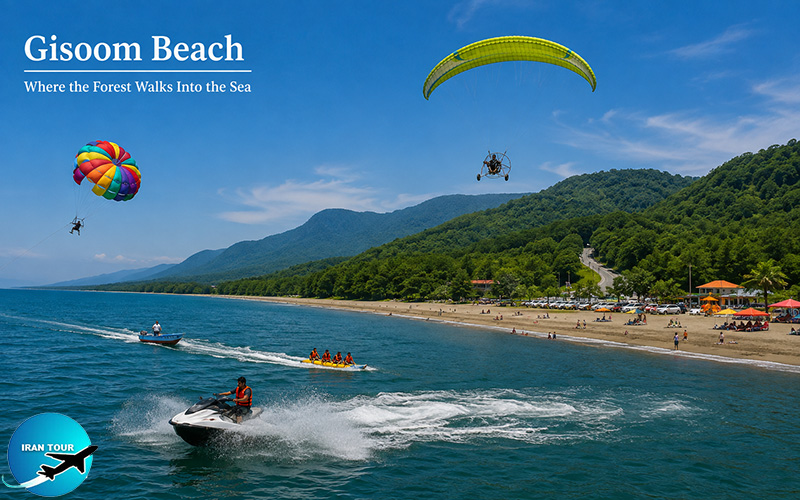
Gisoom Beach offers something genuinely rare: a stretch of Caspian shoreline where the Hyrcanian forest does not end at a parking lot or a strip of road, but continues right to the water's edge. The trees grow dense and tall to within a few meters of the beach, and the transition from forest floor to sand is abrupt enough to feel almost theatrical — one moment you are walking under a canopy of oak and alder, and the next you are standing at the edge of the sea. It makes Gisoom arguably the most photogenic beach on the entire northern coast.
The Caspian in Its Most Unmediated Form
For budget travelers and those who want an experience far removed from resort infrastructure, Gisoom is the right answer on the Caspian. Beach access is free. Camping in the forest park is permitted and inexpensive. The tea plantations of Lahijan — one of Iran's principal tea-growing regions — are a short drive inland and make for a natural half-day excursion. This is a beach for people who want the Caspian in its most unmediated form.
Our Passengers Experience
Nature photographers and outdoor travelers who visit Gisoom through IranTour often tell us they were not fully prepared for what they found. The image of ancient forest trees standing at the very edge of the Caspian — their roots in the sand, the sea beyond — is unlike anything most of them had encountered before on a beach. Several have returned specifically to camp overnight in the forest park and wake up at the water's edge at sunrise. It is the kind of place that creates repeat visitors.
Fereydunkenar — The Family-Friendly Shore
| Province | Mazandaran |
| Accommodation | Local guesthouses and villa rentals ($15–30/night) |
| Hotels | Hamyaran hotel ⭐⭐⭐, Kish Hotel ⭐⭐, Yas App Hotel ⭐⭐ |
| Activities | Swimming, beach walking, birdwatching at Miankaleh |
| Nearby | Miankaleh Biosphere Reserve (UNESCO) — flamingos, pelicans, migratory birds |
| Best time to visit | June – August |
Why Fereydunkenar
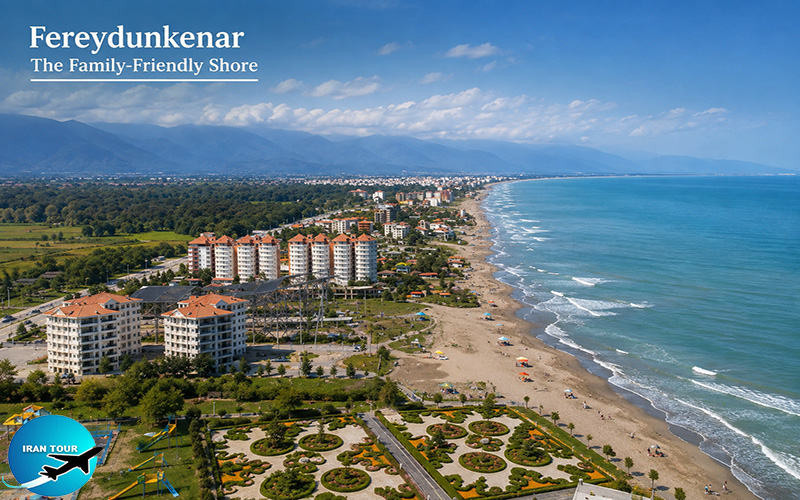
Fereydunkenar is the answer for families who want the Caspian experience without the crowds. Quieter than Chalus, broader and cleaner than many of the busier resort towns, and positioned directly alongside one of Iran's most important wildlife reserves, it offers a combination that is genuinely difficult to find elsewhere on the northern coast: a safe, calm beach for young children and a world-class nature destination for the adults, all within walking distance of each other.
A Quieter Alternative for Families
Fereydunkenar has developed a devoted following among Iranian families who find Chalus and Babolsar too crowded at peak season. Its sandy beach is broad and clean, the water is calm enough for young children, and the general atmosphere is relaxed rather than festive.
The Nature Reserve That Sets Fereydunkenar Apart
Adjacent to the town is the Miankaleh Biosphere Reserve, a UNESCO-designated wetland and one of the most important wintering grounds for migratory birds in the entire region. Flamingos, pelicans, and dozens of other species can be observed here in significant numbers, particularly in spring and autumn. For families combining a beach holiday with a nature component, Fereydunkenar and Miankaleh together offer more than most Caspian destinations.
Our Passengers Experience
Families traveling with young children who visit Fereydunkenar through IranTour often tell us it was the destination that surprised them most on the northern coast. They came expecting a beach holiday and left having watched flamingos feeding at the edge of a UNESCO wetland less than a kilometer from where their children had been playing in the water that same morning. That combination — calm sea for the children, extraordinary wildlife for the parents — is one that we build specific itineraries around, and it consistently produces the warmest feedback of any Caspian destination we arrange.
A note from our team at IranTour: We regularly arrange summer packages for families from the UAE, Qatar, and Kuwait to the Caspian coast. Most arrive expecting something like a standard Middle Eastern resort and are genuinely astonished by the cool air, the mountain backdrop, and the warmth of the local hospitality. We handle visa arrangements, airport transfers from Rasht or Noshahr, and can organize fully private guided tours or flexible self-drive itineraries depending on what the group prefers. If you are traveling with children, we build the itinerary around their ages and interests — the northern coast has far more for young travelers than most families expect.
Persian Gulf & Gulf of Oman: Iran's Winter Sun
In January, while temperatures in Germany, France, and the United Kingdom hover near freezing and the days are short and grey, Iran's southern islands sit at a comfortable 24–26°C under clear blue skies. We have arranged winter escapes to Kish and Qeshm for travelers from Paris, Berlin, and Amsterdam, and without exception they arrive expecting the Middle East and leave having discovered something that feels closer to the Maldives — but with layers of history, geology, and culture that no tropical resort can offer.
The Persian Gulf coast runs across the provinces of Bushehr, Hormozgan, and Sistan-Baluchestan, stretching from the northwest corner of the Gulf all the way around to the open waters of the Gulf of Oman and the Indian Ocean. The islands — Kish, Qeshm, Hormuz, Hengam — are the headline destinations, each with its own distinct character. And at the far end of this coastline, the city of Chabahar stands apart from all of them: the only port in Iran that faces the open ocean, where Indian Ocean waves arrive unimpeded and the landscape around the city looks, with very little exaggeration, like the surface of Mars.
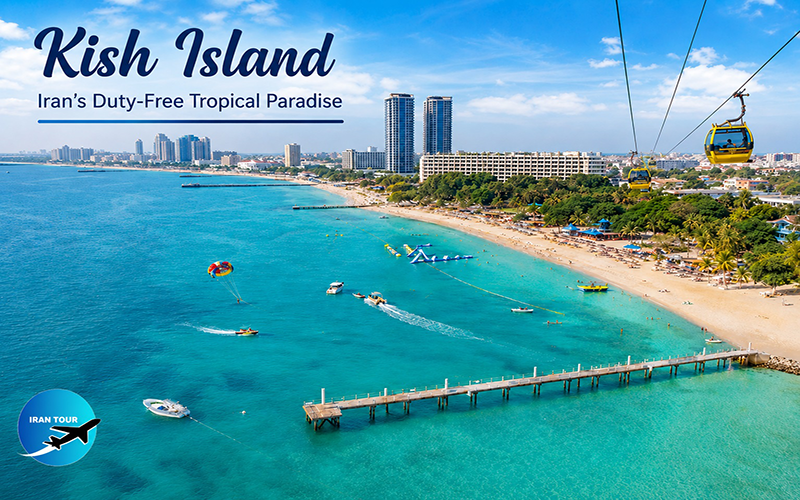
Kish Island: Iran's Duty-Free Tropical Paradise
|
Province |
Hormozgan |
| Kish Airport to island center | 3 km |
| Direct flights from | Tehran, Isfahan, Mashhad (plus connections via Bandar Abbas) |
| Visa | Visa-free for most nationalities — up to 14 days ★ |
| Hotels 5★ | Dariush Grand Hotel · Aramis Plus Hotel · Toranj Marine Hotel, Sadaf Hotel, Aria Hotel, Iran Hotel, Aseman Hotel |
| Hotels 4★ | Shayan Hotel · Marina Park Hotel |
| Hotels 3★ | Flamingo Hotel · Panorama Hotel |
| Activities | Scuba diving, snorkeling, jet ski, parasailing, Greek Shipwreck tour, dolphin watching |
| Free activity | Cycling the coastal path (free bicycle rental available at multiple points) |
| Nearby attractions | Harireh Ancient City ruins, Kariz Underground City |
| Best time to visit | October – April (peak for Europeans: December – February) |
| Budget per day | Budget: $50–70 · Mid-range: $100–150 · Luxury: $200+ |
Why Kish
Kish is the easiest entry point into Iran's coastline — and one of the most rewarding. Visa-free for most nationalities, directly connected to major regional airports, and home to some of the clearest turquoise water in the Persian Gulf, it combines genuine tropical beauty with a level of infrastructure and international comfort that makes a first visit to Iran feel entirely effortless. For European travelers in winter and Gulf visitors year-round, Kish consistently delivers more than people expect and less friction than they feared.
Why Kish Is Iran's Most International Beach Destination
Kish is Iran's most international beach destination, and for very good reason. As a designated free trade zone, the island operates under a special administrative framework that gives most foreign visitors 14 days of visa-free access — no application, no fee, no advance planning required beyond booking your flight. For European travelers in particular, this single fact removes the main practical obstacle that keeps people from exploring Iran, and makes Kish the natural starting point for a first visit to the country's coastline.
The Water, the Coral, and the Famous Shipwreck
The beaches at Kish are the draw that brings people, and they hold up to expectations. The water is genuinely turquoise — that specific shade of shallow Persian Gulf water over white coral sand — and clear enough for snorkeling directly from the beach in many places. The underwater coral gardens around the island are among the most intact in the Gulf, and diving here at depths of 5 to 25 meters reveals a marine ecosystem of considerable richness. The most famous single site is the Greek Shipwreck: a cargo vessel that ran aground off the coast in 1966 and has since become one of the most photographed subjects in Iran, its rusted hull rising from the shallows just offshore. The best time to photograph it is late afternoon in winter, roughly between 5 and 6 PM, when the low light turns the water gold around the wreck.
Beyond the Beach
For those who prefer their Persian Gulf with an unusual twist, the Toranj Marine Hotel deserves a mention — its rooms are built as floating bungalows on the water, with views of the sea from the bed. It is one of the more distinctive hotel experiences in the Middle East. The Kariz Underground City, carved into the coral rock beneath the island centuries ago for water storage and now developed as a subterranean retail and dining space, is another genuinely strange and memorable attraction. Gulf Arab travelers often come to Kish for the duty-free shopping and stay for the water. European visitors usually reverse that priority. Both audiences find what they are looking for, which is part of what makes the island work so well as a destination.
Our Passengers Experience
European travelers who visit Kish through IranTour in winter consistently describe the same moment of disbelief: standing on a beach with turquoise water at 24°C in January, looking at coral just beneath the surface, while at home the temperature is near zero. Many tell us they had assumed Iran's beaches would be a secondary experience — something to see alongside the historical sites. Kish changes that assumption quickly and completely. Several of our clients from Germany and France have returned the following winter specifically for the island, without adding any other destination to the itinerary.
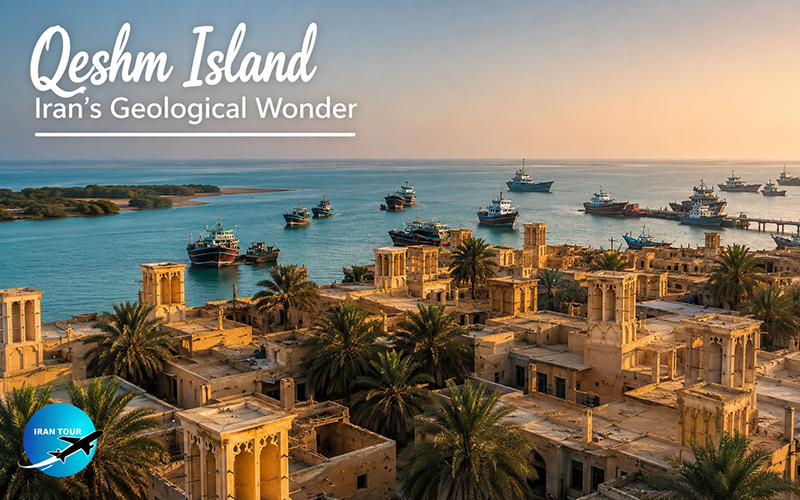
Qeshm Island — Iran's Geological Wonder
| Province | Hormozgan |
| From Bandar Abbas by ferry | 20 minutes |
| Qeshm Airport to island center | 15 km |
| Visa | Visa-free for most nationalities — up to 14 days ★ |
| Hotels 5★ | Ziggurat Hotel (25 floors, panoramic sea view) |
| Hotels 4★ | Eram Qeshm Hotel |
| Hotels 3★ | Niayesh Boutique Hotel |
| Activities | Mangrove kayaking, Stars Valley night tour, whale shark sightings (Nov–Jan, occasional), birdwatching, geotourism |
| Nearby | Hengam Island (20 min boat) · Hormuz Island (45 min boat) |
| Best time to visit | November – March |
| Budget per day | Budget: $40–65 · Mid-range: $80–130 |
Why Qeshm
Qeshm is for travelers who want the Persian Gulf with a deeper layer beneath it. The largest island in the Gulf, it carries a UNESCO Global Geopark designation for a reason: the landscape here is extraordinary in a way that photographs struggle to fully convey. From the lunar gorges of Stars Valley to the tidal mangrove forests of the north coast, Qeshm offers a kind of visual and geological storytelling that no beach resort can replicate. It is the island that turns a beach holiday into something closer to an expedition.
The Island Where the Earth's Interior Is Visible
If Kish is Iran's polished, resort-ready face on the Persian Gulf, Qeshm is its wilder, more geological alter ego. The largest island in the Gulf, Qeshm has been designated a UNESCO Global Geopark in recognition of its extraordinary concentration of geological formations — and spending a few days here makes it clear why. The island is, in a meaningful sense, a place where the earth's interior history is visible on the surface.
Stars Valley, the Mangrove Forest, and What Winter Brings
The Stars Valley (Darre Setaregan): It is perhaps the most visually arresting landscape in the whole of southern Iran: a system of eroded gorges and pillars carved from soft soil and rock over millennia, which at twilight and under a clear night sky takes on an appearance that travelers consistently describe as lunar.
The Hara Forest: A 35-square-kilometer mangrove ecosystem on the island's northern coast — is another world entirely: a tidal system of salt-tolerant trees that can only be properly explored by kayak or small boat, moving through channels where the roots of the mangroves rise from the water on either side and over 200 species of migratory birds use the forest as a staging post.
Between November and January, occasional whale shark sightings have been reported in the waters around Qeshm; this is not a guaranteed experience, but for marine wildlife enthusiasts it adds a compelling reason to time a winter visit.
At IranTour, we commonly combine Qeshm with a two-night stay on Hormuz as a standard five-day winter island package. The two islands complement each other well: Qeshm for geological grandeur and wildlife, Hormuz for pure visual strangeness and the intimacy of a smaller, car-free community.
Our Passengers Experience
Travelers who visit Qeshm expecting a conventional island holiday are almost always redirected by the landscape itself. Our guides consistently report that the Stars Valley at twilight is the moment that stops people in their tracks — guests who have traveled widely through the Middle East and beyond stand at the edge of those eroded gorges as the light fades and say, without exaggeration, that they have never seen anything like it. One family from Kuwait who joined our Qeshm winter package told us afterward that the night sky above the valley — with no light pollution and the geological formations rising dark against it — was the single most memorable image they brought home from Iran.
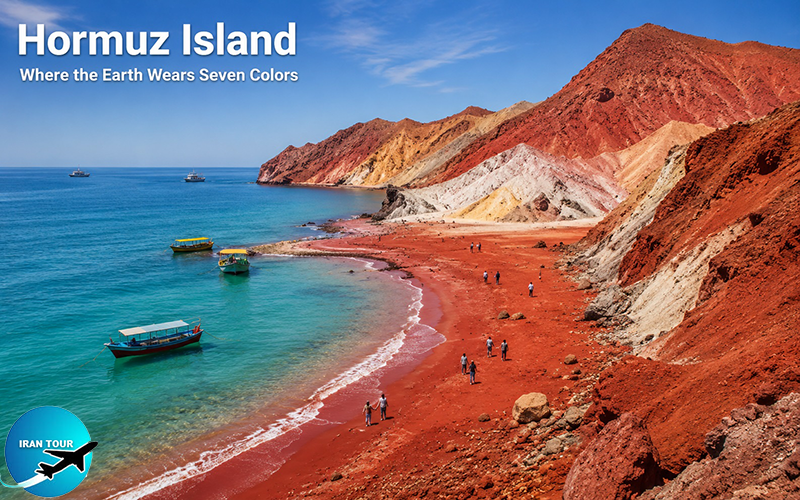
Hormuz Island — Where the Earth Wears Seven Colors
| Province | Hormozgan |
| From Bandar Abbas by speedboat | 30 minutes (~$3 each way) |
| Accommodation | Local eco-lodges and homestays ($15–25/night) |
| Transport on the island | No cars — bicycle or motorbike only |
| Activities | Red Beach walk, Rainbow Valley, Portuguese Castle ruins, mineral soil painting workshop |
| Unique natural fact | Over 70 minerals in the island's soil, including the edible red "Golak" clay |
| Best time to visit | November – March |
| Photography tips | Red Beach: best light 7–9 AM and 4–6 PM · Rainbow Valley: midday for most saturated colors |
Why Hormuz
Hormuz is unlike any other island in the Persian Gulf — or anywhere else. The soil contains over 70 minerals, and the result is a coastline of dark red sand, multicolored cliffs, and a landscape that looks painted rather than geological. There are no large hotels, no cars, and no crowds. What there is instead is one of the most visually astonishing places in Iran, a Portuguese castle with a history that once shaped global trade, and a community small enough that visitors are genuinely welcomed as guests rather than processed as tourists. For photographers, artists, and anyone who has run out of landscapes that surprise them, Hormuz is the answer.
An Arrival That Stays With You
There is nothing quite like arriving at Hormuz Island by speedboat and stepping onto the Red Beach for the first time. The sand is dark red — the color of dried paprika — and it meets water that is an improbable shade of blue-green. Behind the beach, cliffs rise in bands of color: red, white, yellow, purple, ochre. The island's soil contains over 70 different minerals, and the visual result is a landscape that looks painted rather than natural. It is the kind of place that makes people reach for their cameras within seconds of arrival and struggle to put them down for the rest of the day.
No Cars, No Hotels, and a History That Once Controlled the World
Hormuz has no large hotels and no cars. Visitors arrive by boat from Bandar Abbas, explore by bicycle or motorbike, and stay in local guesthouses and homestays that charge between $15 and $25 per night. This absence of infrastructure is, paradoxically, a significant part of the island's appeal — it has the feeling of a place that tourism has not yet standardized or flattened.
The Portuguese Castle at the island's edge is a remnant of the 16th century, when Hormuz was one of the most strategically important trading points in the known world, controlling the strait through which an enormous proportion of global maritime commerce passed. The contrast between that history and the current quiet of the island is part of what makes it memorable.
One local curiosity worth seeking out: Golak, the reddish edible clay that islanders have been consuming as a condiment for generations. It is sold in small packets at the market and is genuinely unusual — an edible mineral, the color of rust, that tastes faintly of iron and earth. Strange, memorable, and found nowhere else.
One local curiosity worth seeking out: Golak, the reddish edible clay that islanders have been consuming as a condiment for generations. It is sold in small packets at the market and is genuinely unusual — an edible mineral, the color of rust, that tastes faintly of iron and earth. Strange, memorable, and found nowhere else.
Our Passengers Experience
Photographers and artists who visit Hormuz through IranTour often tell us it is the destination that most exceeded their expectations — and our clients tend to arrive with high expectations. The combination of the Red Beach in morning light, the Rainbow Valley at midday, and the Portuguese Castle at dusk gives a single day on Hormuz more visual range than most destinations offer in a week. One travel photographer from the Netherlands who joined our southern island itinerary told us he spent his final afternoon simply sitting on the beach watching the color of the sand change as the sun moved. He said it was the first time in years he had put his camera down on a shoot and just looked.
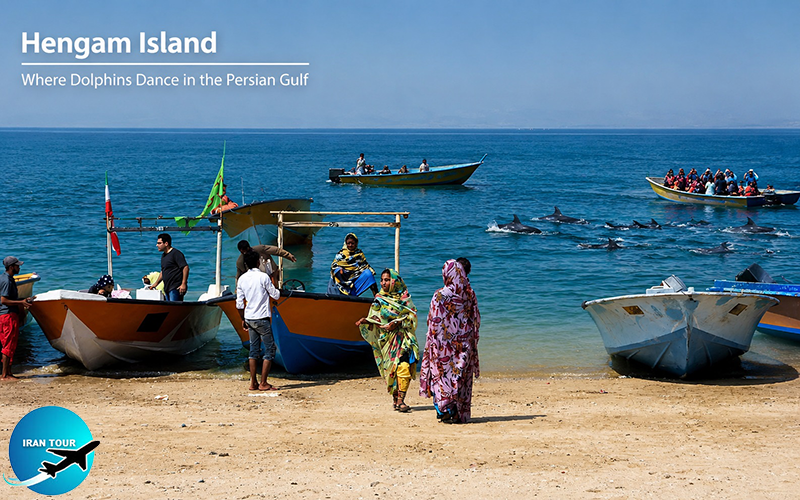
Hengam Island — The Dolphin Sanctuary
| From Bandar Abbas | 45 minutes by boat |
| From Qeshm Island | 20 minutes by boat |
| Accommodation | Basic guesthouses (very limited — advance booking essential) |
| Main activity | Wild dolphin watching — morning boat tours |
| Notable beach | Silver Beach (rare silver-colored sand — unique in the region) |
| Best dolphin season | November – April |
Why Hengam
Hengam is the island that most itineraries leave out — which is precisely why it belongs in yours. Small, quiet, and home to one of the most authentic wildlife encounters available anywhere on Iran's southern coast, it offers something that the larger, more developed islands cannot: wild dolphins in open water, behaving entirely on their own terms, with no feeding programs or tourist infrastructure to alter what you see. Combined with a beach of genuinely unusual silver-grey sand and the freshest grilled fish on the Gulf, a day or a night on Hengam makes a strong case for itself.
Wild Dolphins, No Performance
Hengam is a small island that most itineraries overlook, which is exactly why it is worth including. The Indo-Pacific bottlenose dolphins that swim in the waters around Hengam are genuinely wild — not attracted by feeding programs or conditioned to boats. Morning tours, departing as the sun rises over the Gulf, find them in the open water, surfacing and diving in their own rhythm. There is no performance here, no soundtrack, no narration. Just the water and the animals behaving as they choose. For travelers who have done wildlife watching in more commercialized settings, the contrast is striking.
The Silver Beach and a Day Worth Remembering
The Silver Beach on Hengam's eastern side is one of the more unusual coastal features in Iran — its sand has a distinctly metallic, silver-grey quality that is unlike any other beach in the Gulf. Combined with a day of dolphin watching and fresh fish grilled on the beach, a night on Hengam makes a strong case for inclusion on any southern Iran itinerary.
Our Passengers Experience
Families and wildlife enthusiasts who add Hengam to their southern island itinerary through IranTour consistently rate it as the most emotionally resonant stop of the trip. Children who have watched dolphin shows in aquariums and marine parks are particularly struck by the difference: the animals appear without announcement, move without direction, and disappear again on their own schedule. One family from Qatar who joined our five-day island package described the Hengam morning tour as the moment their children finally understood what wild really means. That is the experience we try to protect by keeping our group sizes small and our approach to the animals unhurried.
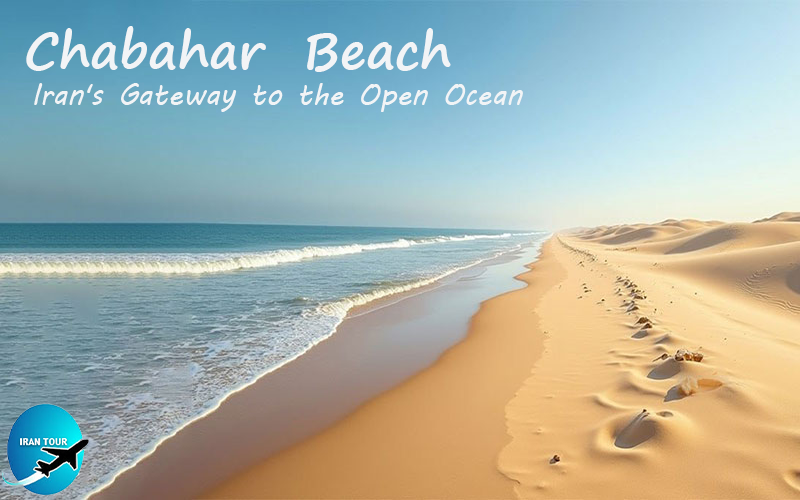
Chabahar — Iran's Gateway to the Open Ocean
| Province | Sistan-Baluchestan |
| Chabahar Airport to city center | 15 km (direct flights from Tehran, approximately 2.5 hours, $45–80) |
| Hotels 4★ | Lido Hotel Chabahar |
| Hotels 3★ | Aram Hotel · Tis Hotel |
| Activities | Beach walking, boat tours, trekking to Martian Mountains, Lipar Pink Lake visit |
| Nearby | Martian Mountains (50 km) · Lipar Pink Lake (30 km) · Darak Beach (145 km) |
| Best time to visit | November – February |
| Budget per day | $40–70 |
Why Chabahar
Chabahar stands entirely apart from every other beach destination in Iran. This is not the sheltered Caspian or the semi-enclosed Persian Gulf — this is the open Indian Ocean, where real swells arrive from thousands of kilometers away and the landscape surrounding the city looks, without much exaggeration, like another planet. Add the spiced lobster of the Baluch coast, the flamingo-pink waters of the Lipar Wetland, and one of the most dramatic stretches of geology in the country, and Chabahar becomes not just a beach destination but an experience with no real equivalent anywhere in the region.
Where the Ocean Arrives Unimpeded
Chabahar occupies a unique position in the geography of Iranian beaches. It is the country's only port with direct access to the open ocean — not the landlocked Caspian, not the semi-enclosed Persian Gulf, but the actual Indian Ocean, where real ocean swells arrive from thousands of kilometers away. The water here has a different weight and energy from anything along the northern or central southern coast. The waves are bigger, the horizon is wider, and the landscape around the city — eroded mudstone formations that have been compared with extraordinary regularity to the surface of Mars — looks like nowhere else in Iran.
The Martian Mountains, the Pink Lake, and the Baluch Table
The Martian Mountains (Kuh-e Martian), a 50-kilometer drive from the city, are among the most photographed geological formations in the country. Wind and water have carved the soft mudstone into ridges, cones, and towers of an almost unearthly regularity. Combining a morning at the Martian Mountains with an afternoon at the Lipar Wetland — the so-called Pink Lake, a flamingo habitat that takes on vivid pink tones at certain times of year — gives a single day in Chabahar more visual variety than most entire beach destinations. The lake's color is most intense at midday; for reflections, the golden hour at the end of the afternoon is best.
The Baluch cultural dimension adds another layer. Chabahar is the gateway to the Baluchestan region, with its own distinct textile traditions, music, and cuisine. The spiced lobster available from October through March is the local dish that IranTour's guides most frequently recommend, and it has become something of a benchmark experience for winter visitors to the south.
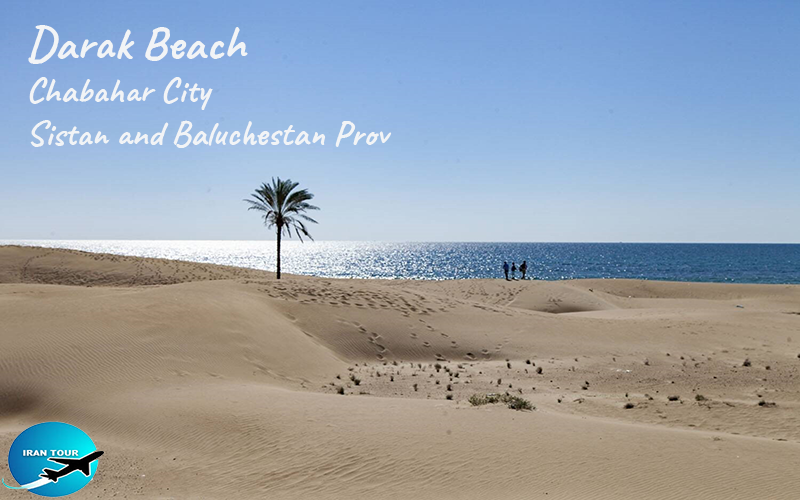
Darak Beach and Ramin — For Those Who Want to Go Further
Darak Beach: Where the Desert Kisses the Ocean: Located 145 kilometers east of Chabahar along the coast, accessible by 4WD. Sand dunes descend directly into the Gulf of Oman in one of Iran's most dramatic coastal landscapes. No infrastructure — camping only. We include Darak as a full-day adventure drive on our Chabahar winter itineraries for travelers with the right vehicle and the appetite for something genuinely remote.
Ramin Beach: Iran's Only Surf Break: A 15-minute drive from Chabahar, Ramin receives swells from the southwest monsoon between June and September (2–6 feet) and from the northwest in November through January. There are no surf schools and no equipment rentals — this is a destination for experienced surfers who bring their own boards. The scene is small, authentic, and set against the backdrop of the Martian Mountains. For the right traveler, it is one of the most improbable and memorable surf experiences in the world.
Our Passengers Experience
Travelers who join our Chabahar winter itinerary through IranTour tend to arrive knowing the least and leave having experienced the most. The combination hits people in a particular order: first the Martian Mountains, which produce genuine disbelief that a landscape like this exists on earth; then the Pink Lake at golden hour, with flamingos wading through water the color of rose; then dinner in the city, where a plate of Baluch-spiced lobster arrives and recalibrates everything they thought they knew about Iranian food. One couple from France who joined our December Chabahar package told us afterward that they had traveled to over forty countries and Chabahar was, without qualification, the most surprising place they had ever been.
From our experience organizing winter tours to southern Iran at IranTour: European travelers are consistently the most surprised by what they find. Kish and Qeshm are genuinely world-class destinations that simply have not yet entered the mainstream travel conversation in Europe or North America. We arrange everything from e-visa processing and direct flights to Kish or Bandar Abbas, to hotel bookings across all budget levels, private boat transfers between the islands, and English-speaking local guides who know every corner of these coastlines. For first-time visitors to southern Iran, we recommend a minimum of five days — three on Kish, two on Qeshm — as a base itinerary. Those with more time often add Hormuz and Hengam, and occasionally Chabahar as the culminating experience.
The Makran Coastal Highway — Iran's Ultimate Beach Road Trip
Most visitors to southern Iran fly into Kish or Bandar Abbas and move between the islands by boat. That is entirely reasonable, and it produces a genuinely excellent trip. But for travelers with more time and an appetite for something that very few international visitors have experienced, there is another option: driving the Makran Coastal Highway, one of the most dramatic and least-known coastal roads in the world.
The Makran coast stretches for over 700 kilometers from Bandar Abbas in the west to Chabahar and the Pakistan border in the east, running along the shore of the Gulf of Oman the entire way. The landscape is extreme — enormous cliffs, wild beaches entirely free of infrastructure, eroded geological formations, traditional fishing harbors where wooden dhows are still built by hand. The road itself is in good condition for most of its length, though certain side routes require a 4WD vehicle. The towns along the way are small and basic, with simple guesthouses rather than hotels. This is not a journey for travelers who require comfort at every stage. It is a journey for people who want to see something genuinely remote and genuinely beautiful, with a historical and cultural depth that standard beach destinations cannot offer.
The key stops along the route, traveling west to east, are as follows.
Minab: The first major town east of Bandar Abbas, is famous for its Thursday market — one of the most visually spectacular traditional markets in Iran, where women in the distinctive embroidered masks and brightly colored clothing of the region gather to buy and sell produce, textiles, and spices.
Sirik: offers dramatic coastal cliffs and a small mangrove forest accessible by boat from the shore.
Jask: roughly the midpoint of the route, has the ruins of an ancient fort overlooking wild, empty beaches, and sunsets over the Gulf of Oman that are among the best we have seen anywhere on the southern coast.
Pasabandar: close to the Pakistani border, is a traditional fishing harbor where wooden dhows in various stages of construction line the shore — a living remnant of the maritime culture that has defined this coast for centuries.
The full route takes four to five days at a minimum to do properly. December through February are the best months, when temperatures are manageable and the light is extraordinary. A private driver or guide is strongly recommended — navigation on the smaller roads can be challenging without local knowledge, and the stops that make the journey special are not all on the main highway. At IranTour, we offer guided Makran road trips as part of our winter adventure packages, usually starting from Chabahar and ending in Bandar Abbas. It is one of the trips we are most proud of running, and consistently one of the experiences our clients talk about for years afterward.
Planning Your Iranian Beach Holiday: Everything You Need to Know
From flights and visas to budget, dress code, and what to eat — everything a first-time visitor needs before booking a trip to Iran's coastlines.
Getting There
Most international visitors to Iran arrive through Tehran Imam Khomeini International Airport (IKA), which has direct connections to most major European, Middle Eastern, and Central Asian cities. From Tehran, Iran's domestic airline network is efficient and affordable, with frequent daily flights to all major coastal destinations.
| Route | Flight time | Approx. cost |
|---|---|---|
| Tehran → Kish Island | 1h 30min | $35–60 |
| Tehran → Bandar Abbas | 1h 45min | $40–70 |
| Tehran → Rasht (Caspian) | 1h | $25–45 |
| Tehran → Chabahar | 2h 30min | $45–80 |
| Dubai → Kish Island | 1h 10min | Varies by carrier |
| Dubai → Bandar Abbas | 1h 20min | Varies by carrier |
Domestic airlines: Iran Air, Mahan Air, Kish Air, Sepehran. Ferry connections: Bandar Abbas to Qeshm (20 min, approximately $2 each way) and Bandar Abbas to Hormuz (30 min, approximately $3 each way).
Visas and Entry
The visa situation for Iran has improved considerably and varies by nationality:
- Kish Island and Qeshm Island: Visa-free entry for most nationalities for up to 14 days. No application, no fee.
- E-visa: Available for most nationalities, processed in 2–7 days, approximately $60–100. Recommended for visits to the mainland.
- Visa on arrival: Available for approximately 60 nationalities at major international airports.
- US, UK, and Canadian citizens: Must obtain a visa in advance and travel with an approved guide.
Our team at IranTour handles visa applications as part of all tour packages and as a standalone service. We manage the paperwork and follow up on processing, which significantly simplifies the process for international travelers unfamiliar with the system.
Safety at Iranian Beaches
Iran's beach destinations are safe for international tourists. The country has a low rate of violent crime, and visitors — particularly those arriving from the Gulf states and Europe — are generally met with warmth and curiosity from local residents who are accustomed to welcoming foreign guests. Tourism police operate in Kish and Qeshm, and both islands have well-developed visitor infrastructure. For travel to more remote areas such as the Makran coast, we advise checking current travel advisories from your home government before departure. As with any international destination, we recommend verifying the current situation before booking, and our team monitors conditions continuously and will advise you of any developments affecting your planned itinerary.
Currency and Budget
International credit and debit cards do not function in Iran due to sanctions. This is the single most important practical point for first-time visitors. Bring sufficient cash in euros or US dollars and exchange at official currency exchange offices (sarrafis), which are available in airports, cities, and major tourist areas. The exchange rate is favorable for visitors holding hard currency.
- Backpacker budget: $30–50 per day (guesthouses, local food, public transport)
- Mid-range budget: $60–120 per day (3★–4★ hotels, restaurant meals, private transfers)
- Luxury budget: $150–250+ per day (5★ hotels, private guides, boat charters)
Tipping is customary in restaurants — approximately 10% is appreciated but not obligatory.
Dress Code at Beaches
Islamic dress code applies throughout Iran, including beach areas. Women are required to wear a headscarf and loose-fitting clothing when outside the water or outside designated private areas. Many public beaches have separate sections for men and women. Private resort areas — particularly on Kish Island — generally have more relaxed arrangements. For swimming, a rash guard or burkini-style swimsuit is practical for women in mixed public beach settings. Our team briefs all clients clearly on what to expect before travel so that there are no surprises on arrival.
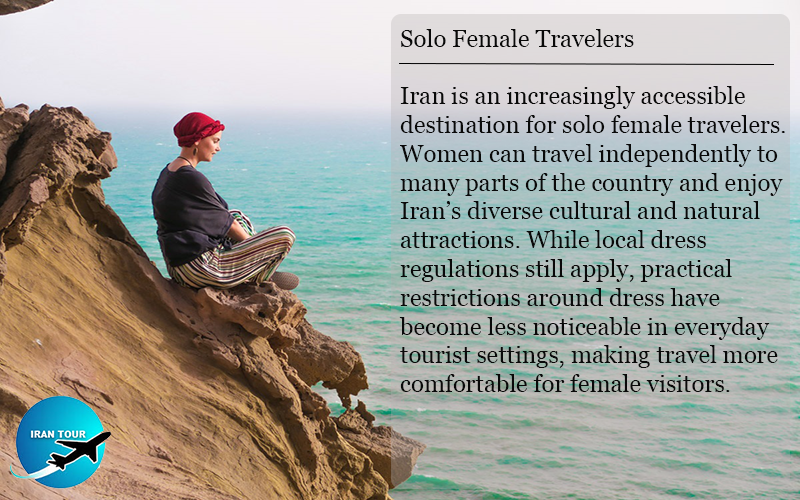
Solo Female Travelers
Iran is statistically very safe from violent crime, and solo female travelers who visit consistently report feeling comfortable and respected. The key practical points: book accommodation at reputable hotels rather than very basic guesthouses; use the Snapp app (Iran's equivalent of Uber) rather than hailing taxis from the street; carry a scarf at all times for moving between indoor and outdoor spaces. Kish Island is the most internationally oriented and straightforward option for a first visit as a solo female traveler — its tourist infrastructure is well-developed and English is widely spoken in the hotel and hospitality sector. Qeshm and Bandar Anzali are also consistently cited by female solo travelers as welcoming and manageable destinations.
Apps and Connectivity
Download these applications before you board your flight to Iran — some are restricted or unavailable once inside the country:
- Snapp or Tapsi — Iran's ride-hailing apps, equivalent to Uber. Essential in cities.
- Balad — offline mapping app with excellent Iran coverage. Works without a VPN.
- VPN apps — download at least two before arrival. Many international websites and apps are restricted inside Iran; a reliable VPN resolves this.
A local SIM card from Irancell or Hamrahe Aval is available at all international airports and is inexpensive. Data coverage is good in all major tourist destinations; along the Makran Coastal Highway, coverage is patchy in places, so download offline maps before you leave the city.
What to eat?
Iranian coastal cuisine is one of the genuinely underrated dimensions of a beach visit here. Each region has its own character, shaped by the different ecosystems and culinary traditions of the coast.
| Region | Must-try dish | Description |
|---|---|---|
| Caspian coast | Mahi Doodi | Cold-smoked Caspian whitefish — sold directly at port markets in Anzali and Astara |
| Caspian coast | Zeytoon Parvardeh | Olives marinated with walnut paste, pomegranate molasses, and fresh herbs — a Gilan specialty |
| Persian Gulf islands | Ghalieh Mahi | Spiced fish stew with fenugreek and tamarind — the defining dish of the southern coast |
| Persian Gulf islands | Maygoo So-khari | Deep-fried Gulf shrimp served street-food style — best eaten at the harbor in Bandar Abbas |
| Gulf of Oman (Chabahar) | Baluch-spiced lobster | Chabahar's signature dish; available October through March when the lobster is at its best |
Start Planning Your Iranian Beach Adventure
Whether you are a Gulf traveler looking for a cool green escape this summer, or a European in search of winter sunshine somewhere genuinely different, Iran's coastlines have something that will stay with you long after you leave. The turquoise shallows of Kish, the red sand beaches of Hormuz, the lotus lagoons of Anzali, the wild surf of the Makran, the dolphins of Hengam rising from the sea at dawn — none of it looks like what most people expect from Iran. That gap between expectation and reality is one of the best things about traveling here.
The beaches are safe, the hospitality is real, and the experiences are genuinely unlike what you find in more traveled corners of the world. Iran's coastline is one of the last stretches of the Middle East that still feels like a discovery rather than a destination. That will not be true indefinitely.
Ready to Plan Your Iranian Beach Trip?
Our team at IranTour has been curating coastal journeys across both the Caspian and the Persian Gulf for years — from the first visa inquiry to the last boat ride home. We handle everything: visa processing, flights, hotel bookings across all budgets, private boat transfers between islands, and English-speaking local guides who know these coastlines in detail.
Frequently Asked Questions About Iranian Beaches
1. What are the best beaches in Iran?
The best Iranian beaches depend on when you visit and what you are looking for. For warm, turquoise water and resort-quality facilities, Kish Island and Qeshm Island in the Persian Gulf are the top choices. For lush, forested scenery and cool summer temperatures, Ramsar and Gisoom Beach on the Caspian coast are outstanding. For geological wonders and unique color, Hormuz Island is unmatched. For raw, oceanic adventure, Chabahar and the Makran coast stand apart from everything else.
2. Is it safe to visit Iranian beaches as a tourist?
Yes. Iran's beach destinations — particularly the major islands of Kish and Qeshm — are safe for international tourists. The country has a low rate of violent crime, and tourist areas are well-monitored. Visitors from Europe, the Gulf states, and further afield travel to Iranian beaches regularly without incident. For remote areas such as the Makran Coastal Highway, checking current government travel advisories before departure is sensible practice.
3. Can I visit Iranian beaches without a visa?
Yes. Kish Island and Qeshm Island both offer up to 14 days of visa-free entry for most nationalities. No advance application is required — you simply arrive. For visits to mainland coastal destinations such as the Caspian coast or Chabahar, an e-visa or visa on arrival is required for most nationalities. IranTour's team handles visa arrangements for all international clients as part of our tour packages.
4. What is the best time to visit Persian Gulf beaches in Iran?
October through April, with December through February being the ideal window for European travelers. During these months, temperatures on the Persian Gulf islands average 22–26°C, the skies are consistently clear, and humidity is low. Avoid June through September, when temperatures regularly exceed 40°C on the southern coast.
5. Are there scuba diving spots at Iranian beaches?
Yes. Kish Island has some of the best diving in the Persian Gulf, with intact coral reefs at depths of 5–25 meters and the famous Greek Shipwreck as the headline site. Qeshm Island also has diving available. For advanced divers, the waters around Chabahar and the Gulf of Oman offer deeper, more open-water conditions. Diving equipment and instruction are available on Kish; for other locations, bringing your own equipment is advisable.
6. What beaches in Iran are best for families with children?
Kish Island is the most family-friendly option in the south: calm, shallow water, extensive facilities, good medical infrastructure, and plenty of non-beach activities including a dolphinarium, water park, and indoor aquarium. On the Caspian coast, Ramsar is well-suited to families — the combination of beach, cable car, hot springs, and nearby forests gives children of different ages multiple things to do. Fereydunkenar, on the Caspian, offers a quieter alternative with a wide, clean beach and the bird-rich Miankaleh Biosphere Reserve nearby.
7. How do I get from Dubai to Iranian beaches?
Direct flights operate from Dubai to Kish Island (approximately 1 hour 10 minutes) and Bandar Abbas (approximately 1 hour 20 minutes). Several regional carriers serve these routes. From Bandar Abbas, you can reach Qeshm Island by ferry in 20 minutes and Hormuz Island by speedboat in 30 minutes. IranTour can arrange complete packages from Dubai that include flights, hotel, island transfers, and guided activities.
8. What are the warmest beaches in Iran in winter?
Kish Island and Chabahar are the warmest beach destinations in Iran during winter months, with average temperatures between 22 and 28°C from November through March. This is comparable to the Canary Islands in winter, and significantly warmer than most Mediterranean destinations during the same period. Qeshm and Hormuz are similarly warm and are excellent alternatives to Kish for travelers seeking a less developed experience.
- Details
- Category: Where to go in IRAN